
By Vince Lee
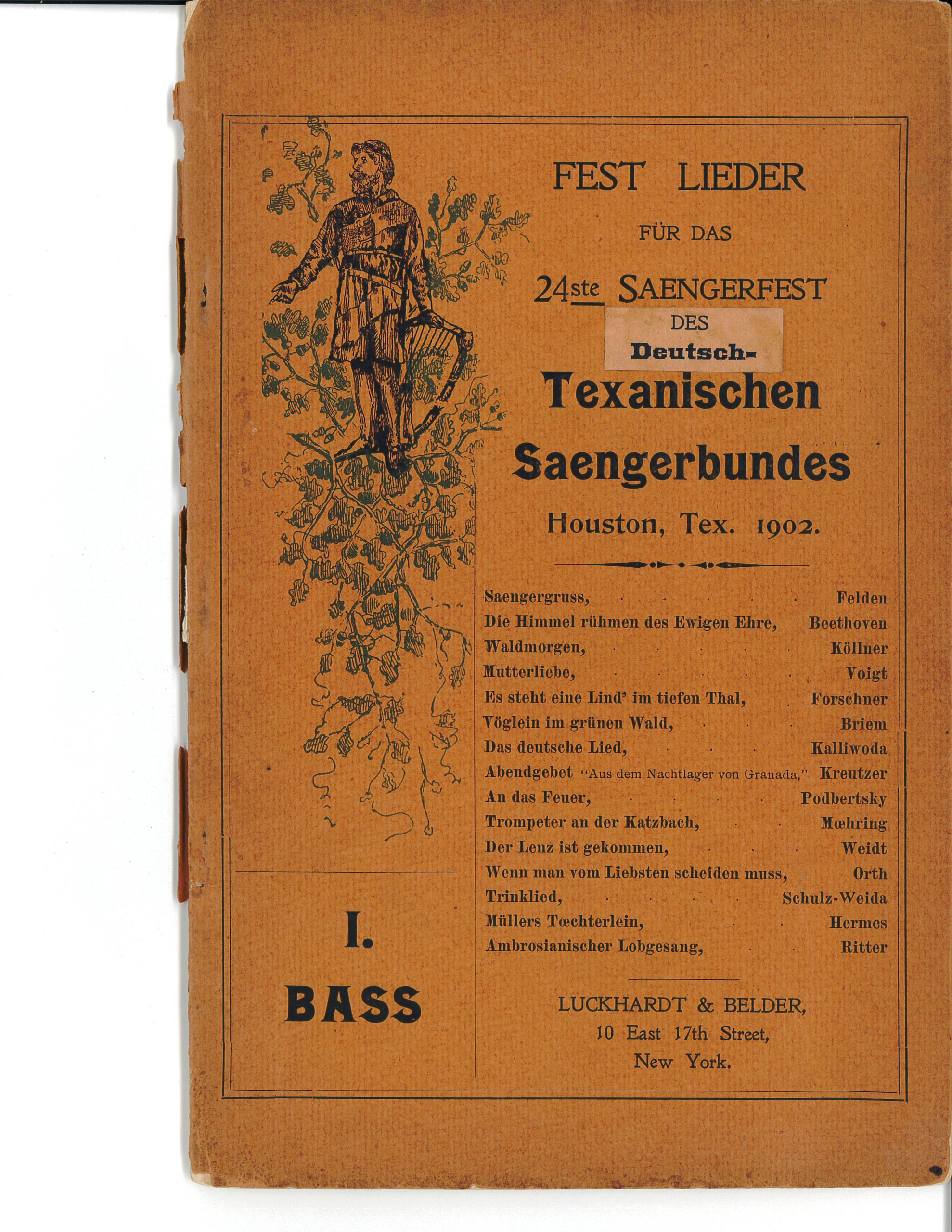
The Houston Saengerbund, meaning “singing society,” was founded on October 6, 1883, by German immigrants. They sought to bring their musical traditions from Germany to their new American homes and communities in Texas. From its inception, the organization has served as a cultural anchor, providing a space for Germans and those interested in German heritage to connect, share their love of music, and maintain their linguistic and cultural roots.
In Theodore Gish’s introduction to his published manuscript on “The History of the Houston Saengerbund,” he emphasized the “recreational, social, and spiritual function of choral singing” for the German immigrant and its therapeutic value of making frontier life and toil a little more bearable, providing respite for these early German pioneers who marched westward and settled in Texas.
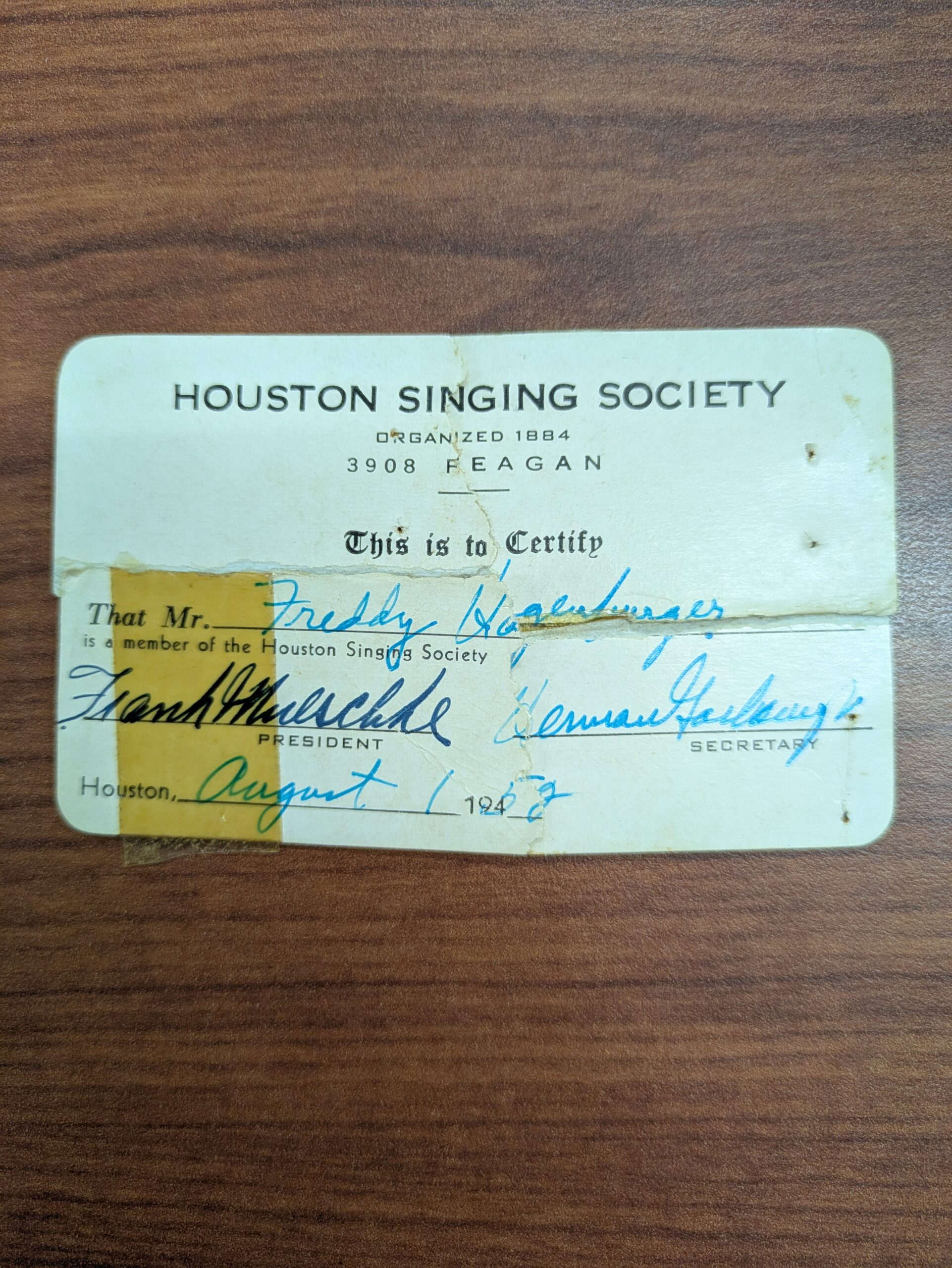
The Houston Saengerbund Records contains songbooks, events programs, ledgers, letters, treasury reports and other materials documenting the activities and administration of the organization from 1874 to 2013. Some of the highlighted materials of interest include a 1952 membership card belonging to a Mr. Freddy Hagenburger when the organization was still known as the Houston Singing Society and located at 3908 Feagan Street in Houston.
Other items of interest include the Bylaws governing the Ladies Auxiliary of the Houston Saengerbund. Founded on April 6, 1937, the auxiliary established and maintained its own Damenchor (women’s chorus). Membership in the Ladies Auxiliary consisted of affiliation- women whose husbands or sons were members of the Houston Saengerbund and daughters whose fathers were members.
The collection also contains published songbooks from the early 1900s when the Houston Saengerbund performed as part of the annual Deutsch Texanischer Sängerbund (DTSB) festival. The festival then rotated among host cities in Texas such as Austin, Houston, and San Antonio.
A challenging period during the Houston Saengerbund’s history can be found in a recorded entry in a Records Ledger book dated July 27, 1937. Although written in German, the entry mentions the rise of anti-German sentiment against the organization due to the Nazi Party. This was a precursor of things to come as the organization took action in changing its name from the Houston Saengerbund to the Houston Singing Society during World War II to mitigate anti-German discrimination at this time.
Throughout its long history, the Houston Saengerbund has performed countless concerts, participated in civic events, and fostered a strong sense of camaraderie among its members. Their repertoire spans traditional German folk songs, classical pieces, and patriotic anthems, all performed with a passion that reflects their dedication to the art form. Beyond the musical performances, the Saengerbund also hosts social gatherings, German language classes, and cultural events that further enrich the Houston community.
Today, nearly 142 years since its founding, the Houston Saengerbund continues its mission, welcoming new members who share their enthusiasm for German culture and choral music. It remains a cherished institution, bridging generations and ensuring that the rich heritage of German song thrives in Houston for years to come.
Special Collections in the M.D. Anderson Library is open Monday-Friday from 10:00 a.m. to 4:00 p.m. For more information on how to view the Houston Saengerbund Records or visit the archives, go to https://libraries.uh.edu/special-collections/.
Vince Lee is the archivist for the Houston and Texas History Research Collection, University of Houston Libraries.
To read the full magazine issue, click on Buy Magazines above to purchase a print copy or subscribe

A recorded entry from the Records Ledger of the Houston Saengerbund in 1937 reflects concern about anti-German sentiment with the rise of the Nazi Party in Germany.

Click Here to check out the Houston Saengerbund website and learn more about their history!
 Follow