
By Miranda Ruzinsky
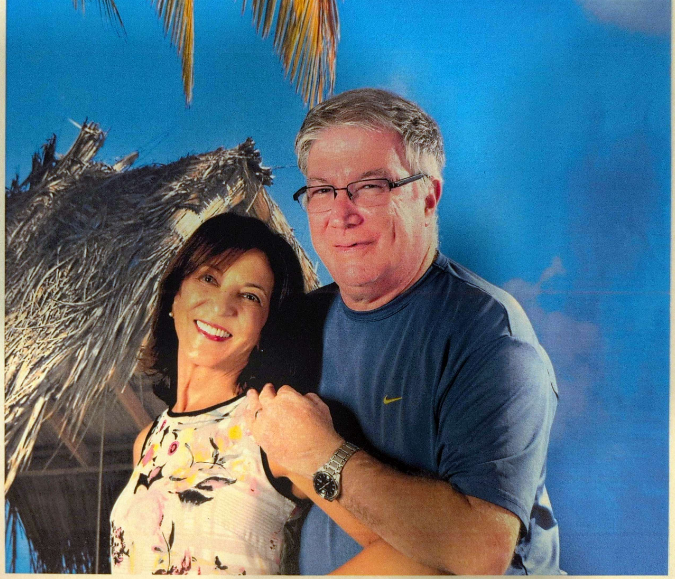
This is a story about identity—self-asserted and externally imposed. Ana Eigler, a Sephardic Jew from Latin America, understood this from a young age. She was the “Jewish girl” in her home country and the “Latin woman” in the United States. In an American Jewish community dominated by Ashkenazi culture (European-based), she is Sephardic, an umbrella term used to describe Jewish heritage from the Iberian Peninsula, the Mediterranean, the Middle East, and North Africa. How did she come to embrace her bicultural identity amid constant discrimination? How did she transcend traditional Jewish gender roles to become a successful businesswoman and diversity expert? Eigler’s story is an empowering narrative that spotlights an often-overlooked Jewish minority, reflects the universal themes of the immigration process, and demonstrates the significant roles immigrants play in American society.
Eigler can trace the Sephardic roots of her maternal and paternal ancestry back several generations. The last names of her maternal grandparents, Abadi and Abbo, first appear in fourteenth and sixteenth century Spanish records. Throughout the next few centuries, her family members moved eastward through countries like Morocco, Algeria, Italy, Syria, and Iran. They settled in the Middle Eastern cities of Safed and Tiberias in the first half of the nineteenth century, experiencing the area’s exchange among several ruling powers including the Ottoman Empire, Britain, and Israel. According to family history, her grandparents, Hanna Abbo Toledano and Simón Abadi Hibiba, were an unlikely pair. Hanna, born into a prestigious family of Rabbis and scholars in the historic region of Safed, was not expected to marry the adventurous and dark-skinned Simón, the child of working-class Jews from the port city of Tiberias. Despite initial concerns from Hanna’s parents, the couple received consent to marry in 1923 and eventually immigrated to Maracaibo, a city in Northwestern Venezuela, in 1928.
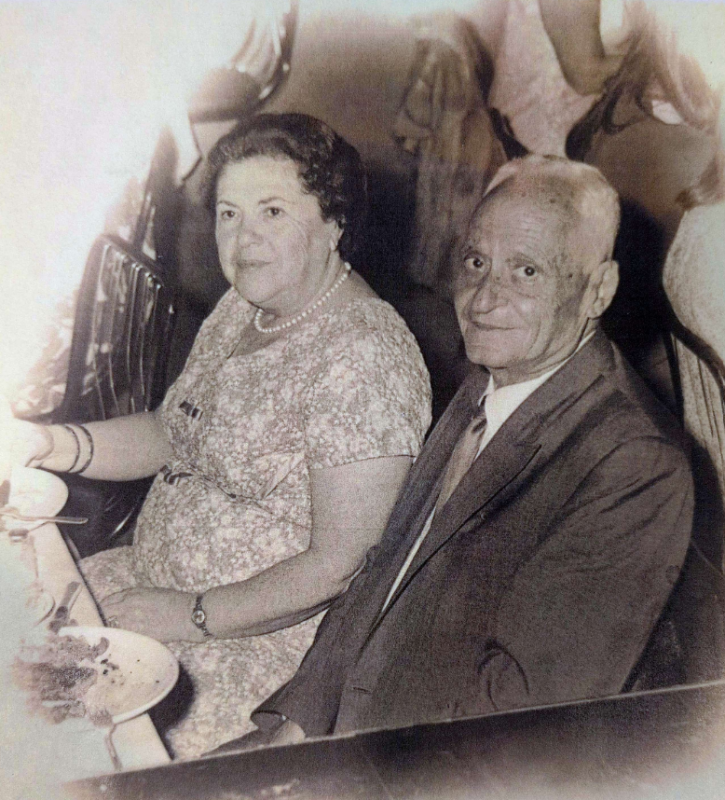
The youngest of seven kids, Eigler’s father was born into a successful Egyptian merchant family that relocated to Manchester, England. When he turned sixteen, he followed his older brothers to South America, where he traveled around the continent before settling in Venezuela. His first job as a door-to-door salesperson led him to Maracaibo, where he met Eigler’s mother. At this time, it was commonplace in traditional Jewish families to invite young Jewish men into their home to assess their potential as a future son-in-law. Thus, Eigler’s parents met when her father was welcomed into her mother’s family home. Though expected to marry the oldest daughter, he chose Eigler’s mother and the two settled in Caracas, Venezuela’s capital, to start a family.

This is where Eigler’s personal story begins. Ana Cohen was born on September 15, 1952, the youngest of three children. She described mid-century Caracas as safe and open, with very little crime, where people could keep “being children for a long, long time.” The local Jewish community, numbering 40,000 people, was divided between the liberal middle-class Ashkenazim and the conservative working-class Sephardim. For Eigler, it was not easy being Jewish in a 98 percent Catholic country. She attended a private Catholic school from kindergarten through high school where she “received messages that being Jewish was not a good thing.” Nor could she hide her “Jewishness.” Her maiden name, Cohen, was known to be of Jewish origin. Every day at school, she sat outside alone for an hour and a half during the Catechism classes, and during services, she remained the only student standing as her parents demanded that she never kneel to Jesus Christ. She was also the target of continual antisemitic gossip that claimed Jews murdered Jesus Christ and had tails between their legs. Considering all this, it is not surprising that Eigler rarely advertised her ethnic origins for fear of being publicly shamed.
To read the full story, click on Buy Magazines above to purchase a print copy or subscribe.

Click here to check out the Houston Holocaust Museums Sephardic Latinx Oral History Project, where Ana is featured!
 Follow