
By Daniel Killian

Today, when Houstonians refer to Chinatown, they most likely mean the area known as Bellaire–an expanse covering over six square miles of shops, structures, and shoppers that celebrate various cultures, from Chinese to Vietnamese, Indian, and beyond. Indeed, the area is better termed Asia Town. Bellaire is just one of four Chinatowns that have emerged during Houston’s history, including two other locations in downtown, prior to passage of the Immigration and Nationality Act of 1965, which opened Asian immigration to the United States.
The first Houston Chinatown was located at Smith Street and Texas Avenue, near the present-day Alley Theater. This Chinatown developed in the 1930s, as the Great Depression forced Chinese Americans to migrate across the United States in search of work. Prior to that time, the few Chinese who lived in Houston likely descended from laborers coming to work on the Houston and Texas Central Railway in 1870. A contract with Chew Ah Heang in San Francisco brought 250 laborers from California to extend the railroad from Calvert to Dallas. However, after six months, they quit and sued the railroad for wage-related contract violations. Despite their contracts stipulating a return journey, many went on to become sharecroppers in Texas.
What happened to most of these early Chinese residents, any children they may have had, or Houston’s earliest Chinatown is a mystery. Little research has been conducted on this community and signs point to little archival documentation given their marginalized status. What is known is that the Smith Street enclave was largely organized around three institutions: the Kuomintang radio station, the On Leong Merchants Association, and the Chinese Baptist Church. Affiliated with China’s nationalist party (Kuomintang), the radio station was managed by the Republic of China’s Houston consulate and did not survive the triumph of the Chinese Communist Party’s revolution in 1949.
Beginning in 1951, the original enclave moved to what is now considered East Downtown, in response to gentrification in the area and relocation of the On Leong Merchants Association to a space the Chinese community purchased at 801 Chartres Street. The Chinese Baptist Church was already across the street on Lamar, thus, businesses and organizations followed, most notably the Chinese American Citizens Alliance. This Chinatown
—now known as Old Chinatown—enjoyed about thirty years of community prominence before entering decades of decline and disappearance from its standing in downtown, the Chinese community, and public memory.
Several events caused Old Chinatown’s decline. First, in 1981, the city built the George R. Brown Convention Center (GRB) directly across Chartres Street and the Eastex Freeway (I-69) from it. The freeway runs on an elevated section beside and parallel to Chartres. While the GRB’s construction was initially celebrated as an opportunity to attract businesses to Old Chinatown, once finished, rising land prices put property acquisition firmly out of reach for the enclave’s community members. This, along with aging sewer lines, halted development in the area. Additionally, the GRB’s expansion in 2001 blocked off the main McKinney Street entrance to Old Chinatown, isolating it from downtown. The area’s recent rebranding as East Downtown (EaDo) opened it up to gentrification, but the final blow came from the North Houston Highway (I-45) Improvement Project that will soon demolish the few remaining Old Chinatown structures for the freeway’s expansion.

Concomitantly, the founding of a new Chinatown on Bellaire Boulevard near Beltway 8 attracted visitors and businesses away from Old Chinatown. Although the area is known simply as “Bellaire,” it is not part of the City of Bellaire that straddles Loop 610 West. The Bellaire Chinatown seems better suited to the needs of the increasingly suburban population of Chinese Houstonians today, especially given its proximity to Alief, which boasts the largest Asian population in Houston. Plans for the “new Chinatown” west of Fondren Road began in the mid-eighties. Desegregation in the late twentieth century, combined with what immigration attorney Gordan Quan characterized as a “maturing,” wealthier community, increasingly enabled Chinese Americans to purchase homes in the suburbs.
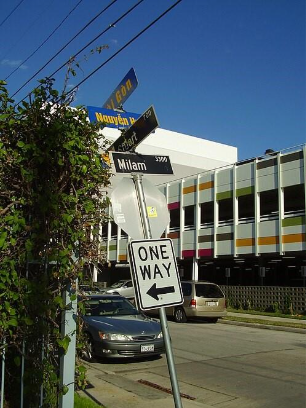
The Asian American population in Houston has experienced major growth in recent decades, after the 1965 Immigration and Nationality Act struck down the quota system that limited entry for non-European immigrants. Vietnamese immigration became prominent following the fall of Saigon, with the original Vietnamese enclave developing along Milam Street in Midtown. In the 1990s as the Vietnamese population grew, rents rose, and gentrification pressed in, Little Saigon moved adjacent to what is now Bellaire Chinatown Today, Little Saigon continues to be a major component of Bellaire Chinatown’s multicultural character. As the area continued to grow, increased demand necessitated opening another Asia Town in Katy in 2017.
Characterizing Old Chinatown’s decline, therefore, is a complicated task. While gentrification played a large role in the move, Bellaire became a better fit for today’s Chinese community. Perhaps the lack of commemoration for Old Chinatown is the biggest tragedy in its fall. No real efforts have been made to preserve its structures, the last of which will come down as the I-45 expansion goes up. It lacks historical markers, walking tours, or any acknowledgement of the role the area once played in the Chinese community. However, this might change. Gordan Quan has mentioned plans, complete with Texas Department of Transportation (TxDOT) funding, to install artwork commemorating the role of Chinese family history in the Old Chinatown area.
To read the full story, click on Buy Magazines above to purchase a print copy or subscribe

Mapping Houston’s Old Chinatown (MHOC) is working to preserve their culturally rich history in a city that is rapidly expanding. Click here to read about MHOC’s mission, upcoming events, and more.
 Follow