
Letter from the Editor
By Debbie Z. Harwell
My first formal oral history interviews as a graduate student in 2009 were with members of the Yates Class of 1958, and it changed my understanding of historical research. Even though I went through school in the Houston Independent School District (HISD), I did not know much about Yates, or any of the Black schools, because the system was segregated. When my high school, Westbury, “integrated” in 1968, we started with one Black student and one Black teacher. None of this caused a stir except among the parents opposed to desegregation.
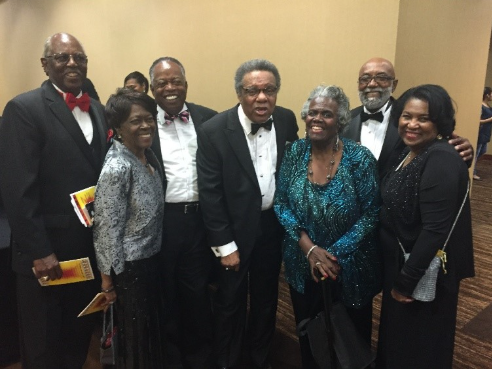
Meeting and getting to know Deloris Johnson, Donald Dickson, Thelma Robins Gould, and Thurman Robins from Yates class of 1958 was rewarding. They became my dear friends and taught me oral history’s value in learning from history makers. As a historian, I had researched racial disparities in education, but I was unfamiliar with how that played out in my hometown. I had never heard of James D. Ryan, William Holland, or the Turkey Day Classic that raised such passion among the Yates alumni.
A native of Navasota, J. D. Ryan graduated from Prairie View A&M in 1890 and started teaching in Houston. In 1900 he became a math teacher at Houston Colored High School, and in 1912, the district promoted him to principal. When Yates opened as the second high school for Black students, HISD chose Ryan to lead it. Highly popular, he did many things to support his students and the school, even personally covering expenses when needed; however, he also tried to get what he could without “rocking the boat.”
When Ryan died in 1941, assistant principal William Holland replaced him. Born in 1904, he came of age during the New Negro movement – a period of racial consciousness.
Holland was committed to improving conditions for his students, but he definitely rocked the boat. He insisted on new textbooks instead of hand-me-downs with missing pages, he required equipment for science labs, and he expected his students to march in parades like other bands, in front of the horses instead of behind them where they had to dodge the droppings. He demanded Yates receive a proportion of event proceeds comparable to white schools, especially for the Turkey Day Classic football game between Yates and Wheatley that drew tens of thousands of spectators.
The thing that resonates with me the most about Yates is how these alumni, almost seventy years after their graduation, still remember Professor Holland. They speak of his advocacy with reverence and his mistreatment with anger. And they live by the principles of excellence that Holland instilled in them: failure is not an option, work twice as hard and be twice as good, be prepared to excel, and do not take a backseat to anybody.
As the students and I worked on these articles, we came to appreciate the struggles Yates’s students faced for a century; yet, they still found ways to excel in sports, the arts, law, politics, and education. For example, Deloris, Donald, Thelma, and Thurman spent their careers as educators, making a difference in the lives of young people just as Holland had done for them. I hope that you, too, will find these Yates stories inspiring.
Other articles in this magazine speak to education, albeit in different ways. The celebration of the University of Houston’s M.D. Anderson Library’s seventy-fifth anniversary demonstrates the growth and contributions of the library over time. UH’s first freestanding library space marked a milestone in the university’s quest to be recognized as a research institution.
In the heyday of print newspapers, Hubert Roussel educated the public with his reviews of the performing arts, noted for “his acerbic wit, his bold advocacy for cultural progress, and his eloquent writing.” Today this style of journalism is becoming a lost art; nevertheless, the article makes you feel the excitement of the bygone era.
Lastly, the photo essay of Montrose is a window into this historic community that has undergone change but still shines through the camera lenses of UH Global Studies and Anthropology students as they interpret the sights around them.
To read the full letter, click here.
Debbie Z. Harwell, Ph.D., is an instructional associate professor in History and Honors at the University of Houston and editor of Houston History.

Click here to listen to more oral interviews about Yates High School and its alumni.
 Follow