By A’viyon M. Robinson
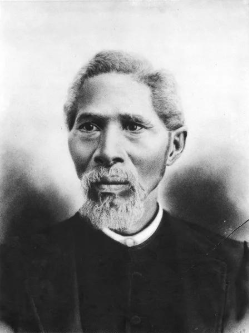
When mentioning Jack Yates High School to a native Houstonian, they might recount fond memories or well-known anecdotes about a school whose legacy is inextricably tied to Houston’s Third Ward. What many may not know, however, is the history of the high school’s namesake. Reverend John Henry “Jack” Yates was a minister, educator and pillar in the city’s Black community dating back to the 1860s. From his childhood and early years spent in enslavement in Virginia to his storied journey into southern Texas during the Civil War and emancipation period, Jack Yates remains an illustrious figure whose impact spans far beyond the crimson and gold.
Childhood to Freedom in 1865
Jack Yates was born on July 11, 1828, in Virginia to enslaved parents Robert and Rachel Yates. When the mistress of the property passed away, Rachel became the caregiver to the enslaver’s son who taught Yates how to read and write, despite the practice being illegal at the time.i Reading became a pastime that consumed Yates in all that he did, from his time working in the fields to his participation in religious spaces. Such a skill set was invaluable throughout his formative years, making it possible for Yates to sustain himself when upward social and economic mobility was nearly impossible for Black Americans.
As Yates spent his adolescence and early adulthood earning money by fishing and working on his enslaver’s property, he remained steadfast in the church, which regularly held religious events organized by its Black congregation. Yates put his literacy skills to use in church ventures that were rooted in the interests of his community. Yates’s involvement in these gatherings enabled him to network and fellowship with like-minded individuals such as his future wife, Harriet, who came from a neighboring plantation. Around this time, Yates bought his freedom and was on the path to living a life of his own choosing. His marriage to Harriet and the expansion of their budding family was a step in the right direction.ii
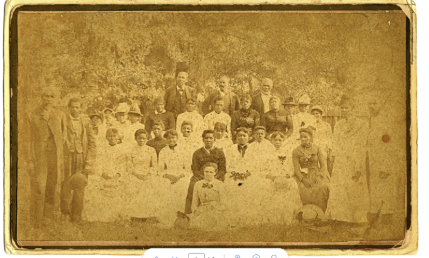
Unfortunately, circumstances beyond his control forced Yates to make one of the hardest decisions of his life. In 1863, Harriet’s enslaver moved his property to a plantation in Matagorda County, Texas, to flee the Civil War and was unwilling to grant Harriet her release. To avoid separating his young family during this cross-country move, Yates, a free man in Virginia, willfully returned to enslavement, joining Harriet and their children in the move to Texas.iii The Yates family remained enslaved on the Matagorda property until the Civil War ended and the issuing of General Order No. 3 on June 19, 1865, which marked the end of chattel slavery in Texas. Finally afforded their collective freedom, the Yates family relocated to Houston to begin their lives anew.
Entrepreneurship Following Emancipation
Once in Houston, Yates settled in the Freedmen’s Town area of Fourth Ward, where he worked as a freight hauler and drayman. Economic stability was a key pursuit, evidenced by his business endeavors that allowed him to purchase property in the region and spread his knowledge of financial literacy amongst his community members. On weekends, Yates continued his leadership role by preaching sermons to the faithful, earning him a reputation as a well-known and highly sought-after minister. He remembered the work he had done within the church during his youth and utilized those experiences as the foundation for uplifting his new community in Houston.iv
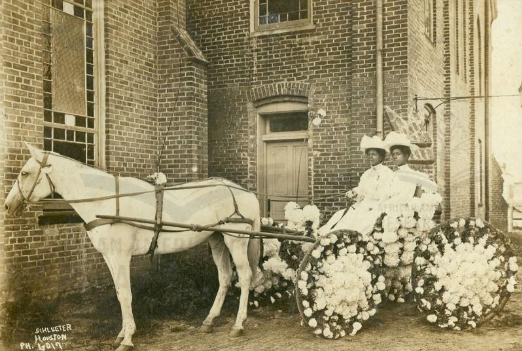
In 1867, Texas held the First Black Baptist Convention following a push from Northern Baptists to bring Christian ministry to the newly freed Black population after the Civil War. There, Yates was officially ordained as a reverend by a missionary from Galveston. Just one year later, he found a permanent church home, becoming the first full-time minister of Antioch Baptist Church, Houston’s first African American Baptist church. Yates’s pastoral efforts further solidified him as an enterprising and entrepreneurial man whose past experiences of racialized hardship did little to deter him from the life he sought to create.v
Service to Third Ward and Greater Houston
More than anything, Yates was a man who believed in the power of family, community, and working together for racial uplift. From the time he arrived in the city, he set about strengthening the community and invested in the holistic liberation of the Black community, believing in enrichment beyond the church steps. With the help of Antioch’s congregation, the church partnered with Trinity Methodist Episcopal Church (now Trinity United Methodist) to purchase ten acres of land on Dowling Street (now Emancipation Avenue) in 1872. This land became Emancipation Park, where Black residents could hold their annual Juneteenth celebrations. The park also offered a space where the Black community could celebrate, commune, and collaborate on their own, and it remains a staple for doing so by hosting cultural events, political rallies, sports activities, classes, and memorials to name a few of its community outreach activities.vi
In addition to cofounding Emancipation Park, Yates played an instrumental role in establishing Houston Academy in 1885 to educate Black children and formerly enslaved people who were prohibited from learning to read prior to emancipation. Yates cared greatly for the education of his community, from children to elders alike. Having religious, academic, and natural spaces for Black Houstonians to further themselves was a lifelong mission for Yates, who seldom missed an opportunity to advance his cause.vii
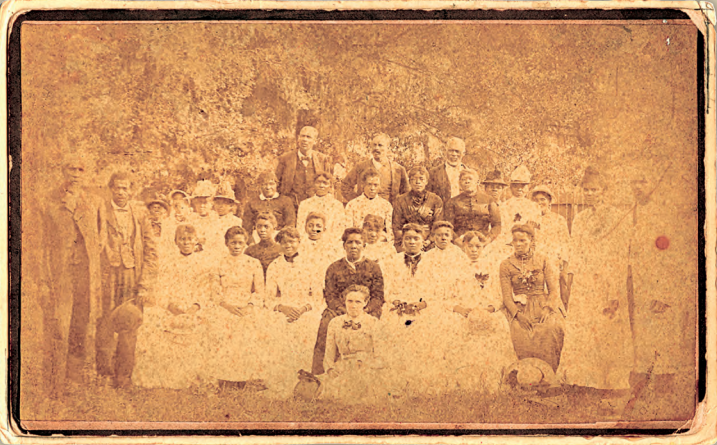
Jack Yates’s Legacy
Yates passed away on December 22, 1897, at the age of sixty-nine.viii Jack Yates High School was named in his honor, opening in 1926 as the second Black high school in Houston. The high school made an important contribution to Black Houstonians at the time and upholds its legacy today as a school laden with rich cultural significance for many who attended or grew up in the area.
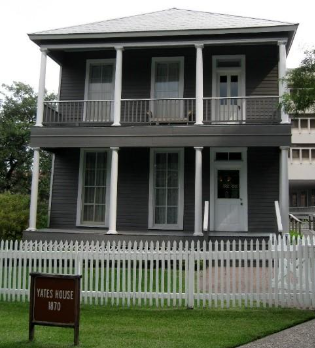
Today, Reverend John Henry “Jack” Yates is remembered by many for his religious work, community service, and steadfast dedication to the Black community in Houston, Texas. Both Yates’s home and Antioch Baptist Church still stand today, welcoming visitors of all ages, races, and origins to continue upholding the legacy of a man whose benevolent spirit and enduring work ethic have left behind a culture so cherished that it has become inseparable from the city of Houston itself.
A’Viyon Robinson is a third-year history student at the University of Houston. As a native Houstonian, her interests include community enrichment and preservation, as well as archiving and actuating the oral histories of the city’s more marginalized communities.
To read the full story, click here.

Antioch Baptist Church can be found at 500 Clay St in Downtown Houston, standing as the first brick structure to be built and owned by African Americans in the city following the Civil War. Click here to learn more about the church’s past and its current community involvement.
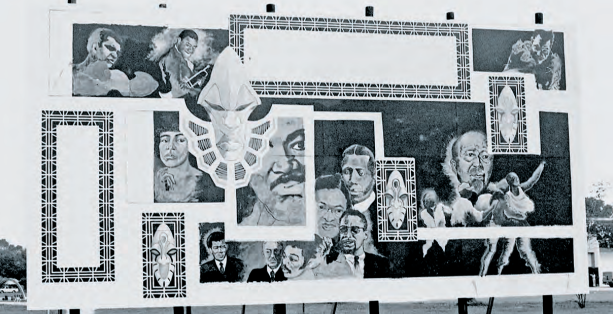
Click here to read more about Emancipation Park and its lasting impact in the Third Ward community.
The Public Historians at Work podcast through the University of Houston’s Center for Public History highlights stories of the city’s exciting past, present, and prospective future. Click here to listen to the episode that tells the story of historic Emancipation Park.
 Follow