
By Lexi Gaddis
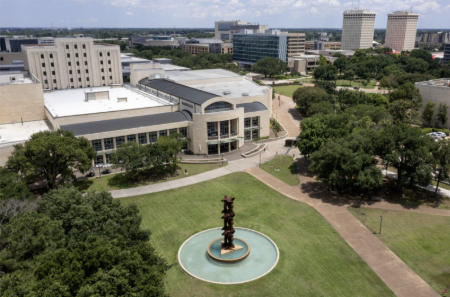
The M.D. Anderson Library can be found at the heart of the University of Houston (UH) campus, filled with students tucked into study rooms, fingers typing on keyboards, and textbooks stacked up beside iced coffees. For UH students, the library is more than a place to check out books or study for exams; it is a home away from home and a place that has witnessed generations of growth. As M.D. Anderson Library celebrates its seventy-fifth anniversary in April 2026, it remains at the center of campus life, evolving with each new class of Coogs who pass through its doors. Every student brings new ideas and ways of learning while continuing to rely on the same quiet spaces and sense of focus that the library provides. M.D. Anderson Library has become a hub for collaboration, creativity, and community. From late-night group study sessions to relaxing breaks in between classes, the library offers students a place where they can grow academically and personally. With resources like peer mentoring in information literacy, equipment lending, and research workshops, the library is dedicated to student success, a commitment that can be traced back to the library’s humble beginnings.
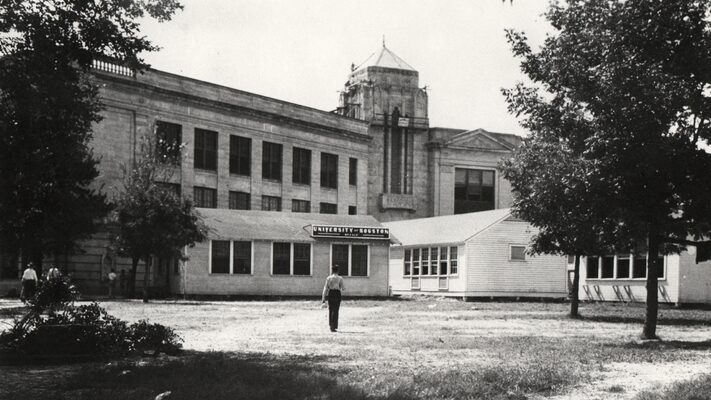
The University of Houston was founded in 1927 as Houston Junior College; its original library collection was housed at San Jacinto High School on Holman Street, where the classes met. Librarian Ruth S. Wikoff fostered the school’s small collection. With Wikoff’s leadership, resourcefulness, and vision for the library, the collection grew even as the college faced constraints in space and funding. As the college evolved, so did its physical space. The college moved from San Jacinto High School to temporary facilities until 1939 when the university moved to its permanent home on the current campus and into the newly built Roy G. Cullen Building, which was its first building.
As UH transitioned from a junior college to a university, the need for a dedicated and larger library space arose. That need grew exponentially after World War II and passage of the G.I. Bill, with enrollment going from 2,720 in fall of 1944 to 10,028 by 1946. The makeshift collections scattered around campus could no longer support the growing number of students, classes, and faculty. The university needed more than shelves of books; it needed a dedicated space for students to do research and have a sense of community. This turning point for UH came in 1946 when the M.D. Anderson Foundation awarded the university a $1.5 million grant to build a permanent library. This gift marked a pivotal moment for UH as both a donation and an endorsement of the university’s future.
Houston architectural firm, Staub, Rather, and Howze, designed the building after classical architecture that conveyed a sense of academic prestige. The design featured grand windows and elegant columns, meant to evoke the value of knowledge. One striking feature along the building’s exterior was the engraved names of great thinkers and writers, like da Vinci, Moses, Galileo, Franklin, Tolstoy, and Freud. The library officially opened its doors on Christmas Eve in 1950, housing over 56,000 volumes. With the creation of the M.D Anderson Library, UH finally had a space worthy of its academic aspirations.
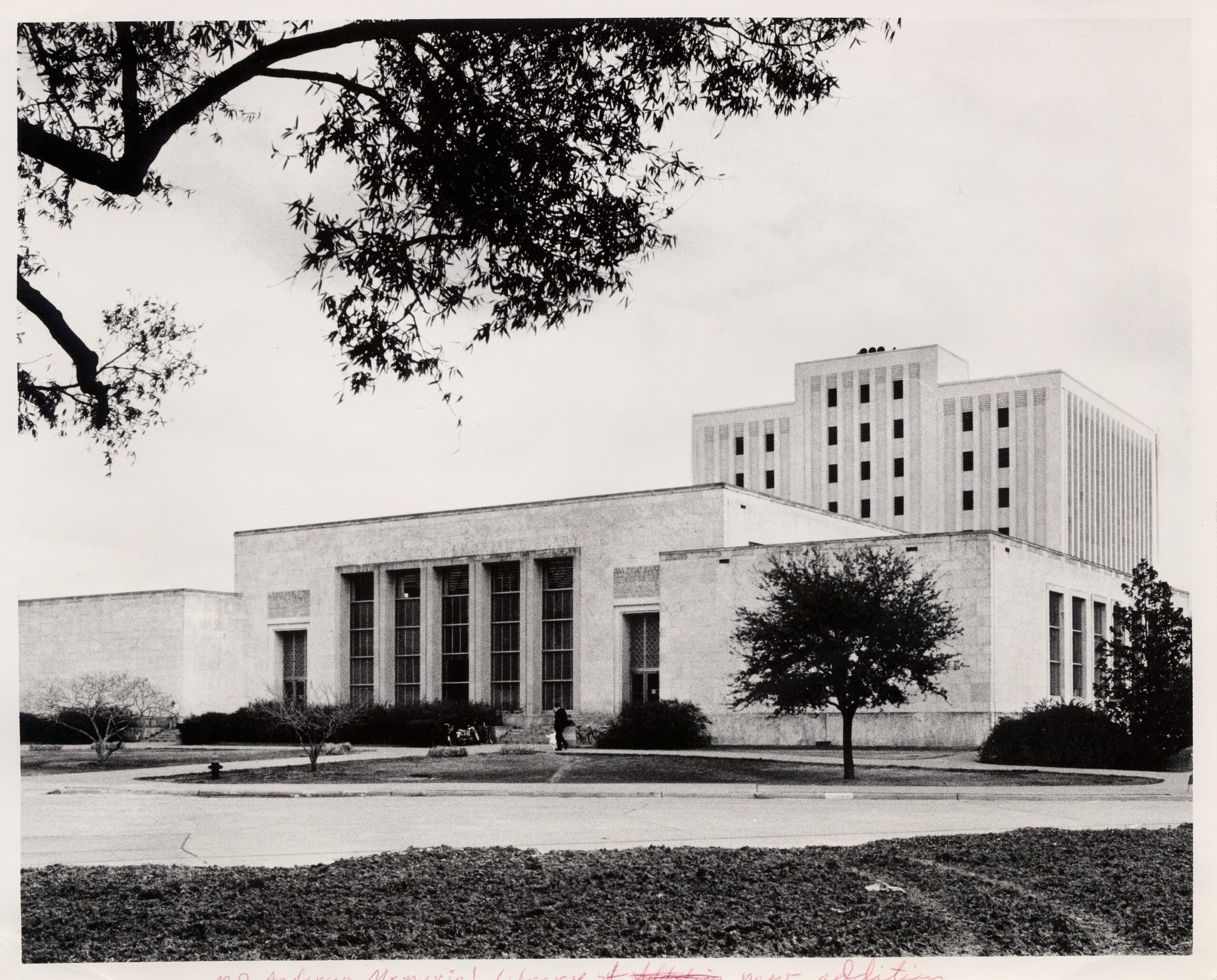
As the university grew in size, so did the library, adapting to meet the demands of a larger student body and rapidly progressing academic landscape. The first major expansion came in 1968, when the university constructed an eight-story addition known as the Blue Wing behind the original limestone building. Designed to relieve crowding and accommodate a growing collection, the tower added many study and storage spaces, while continuing the tradition of inscribing the names of great thinkers along its walls.
By the mid 1970s, it became clear that even the Blue Wing would not have enough space to meet the library’s needs. Enrollment surpassed 27,000 in 1971, and the university commissioned alumnus Kenneth Bentsen to design a three-phase expansion plan. The first phase completed was the five-story Brown Wing, finished in 1978. This addition not only increased capacity but also provided specialized spaces such as the George R. Brown Room, dedicated in 1981 as a memorial to the USS Houston and was also used for events, exhibits, and gatherings. For two decades the Brown Wing stood as the library’s only major expansion, with the interior being continually reconfigured to meet the changing needs of the students and librarians it housed.
Another era of growth came in 2004 with a $20 million renovation that nearly doubled the library’s size. The project added the Gold Wing and the John O’Quinn Atrium, creating a central gathering space filled with natural light and student activity. The renovation also brought to fruition the idea of what a modern library should offer. In addition to study carrels, the building now included large computer labs, collaborative study areas, and a twenty-four-hour lounge. The later addition of the Elizabeth D. Rockwell Pavilion in honor of 1996 UH Alumni Association Distinguished Alumnus Elizabeth Dennis Rockwell further connected the library’s architecture to its mission of celebrating knowledge.
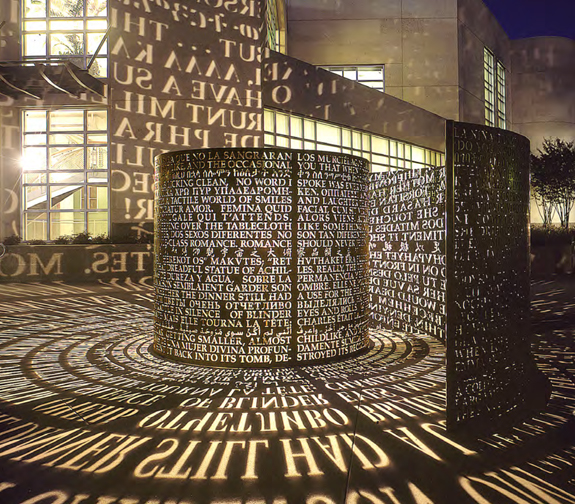
Over the years, the library has proven it is more than a collection of books; it is a space where art, culture, learning, and identity converge. One striking example of this is A Comma, A by artist Jim Sanborn, a light sculpture installed at the entrance to the library. This piece of art projects passages of literature in multiple languages across the building’s facade when lit from within at night. The piece symbolizes the importance of language, storytelling, and the preservation of knowledge, which is what the library is about. Inside the library, its collections extend beyond English texts to encompass works that reflect Houston’s diverse population. By making global literature accessible, the library provides a platform for cultural dialogue and the preservation of linguistic traditions that are often at risk of being forgotten. The addition of the Rockwell Pavilion strengthens this role. As a flexible event space, it hosts lectures, author talks, exhibits, and gatherings. With this, the library transcends its function as a place for study; it stands as a beacon of cultural exchange and intellectual growth in keeping with the University’s mission.
By the late twentieth century, the M.D. Anderson Library remained the cornerstone of knowledge on campus, but its mission was to evolve to meet the demands of an increasingly digital world. One of the most transformative shifts came with the migration from the traditional card catalog to an electronic catalog system—a monumental task that redefined how students interact with information. Building on this progress, the library launched its Digital Library, now known as UH Digital Collections, to preserve and share rare materials online. This advancement paved the way for the Digital Research Commons, which provides tools and expertise for projects involving data visualization, text mining, and digital archiving.
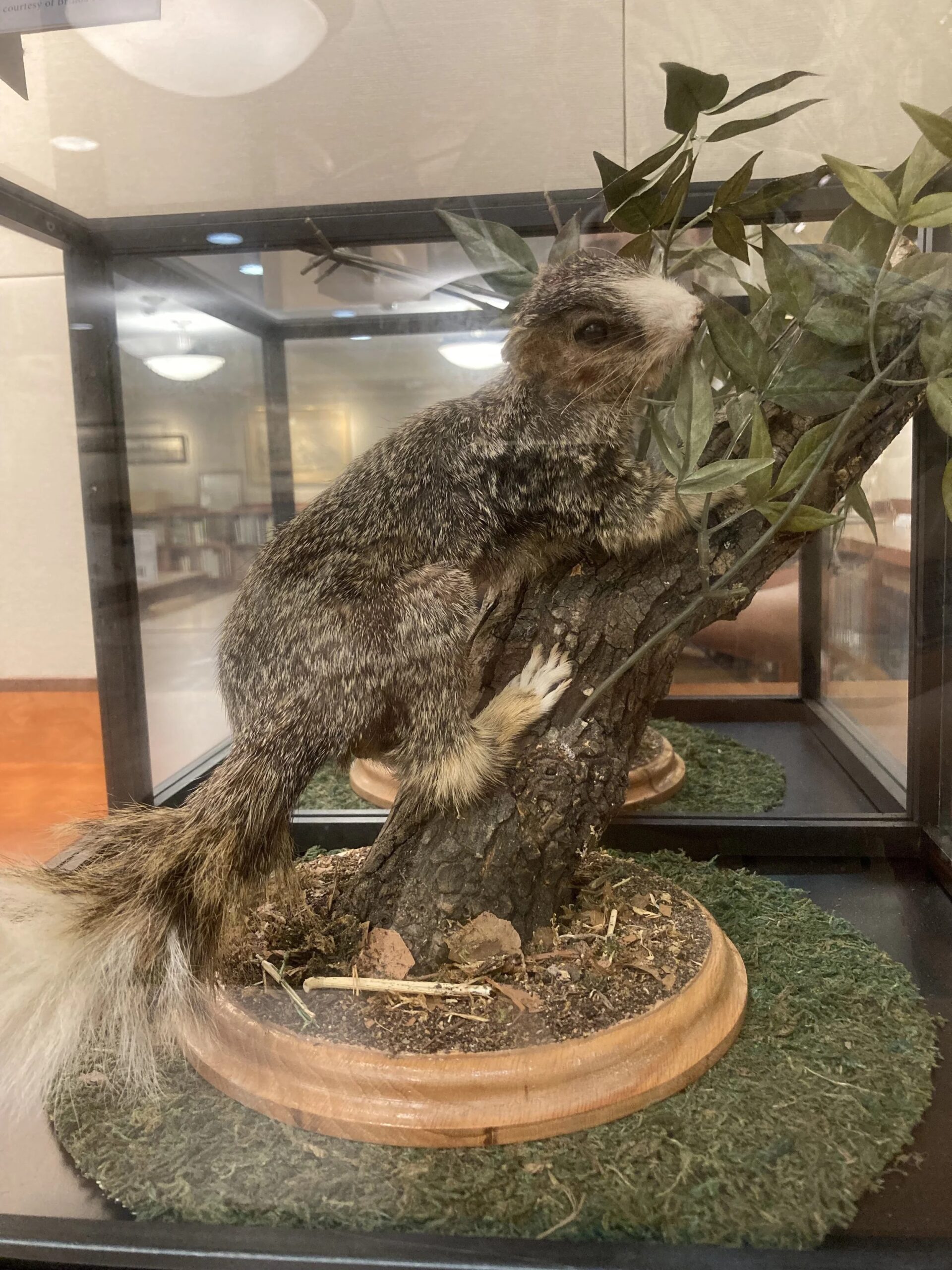
As fields of study expanded, the library’s Special Collections also grew to preserve the university’s unique history as well as Houston’s diverse cultural legacy. The University Archives, formally established in 1996, began under the direction of its first archivist, Andrea Hough, who recognized the importance of preserving the institution’s history for future generations. These archives today house rare materials, photographs, and documents that trace the growth of UH. Special Collections even houses the special taxidermized “white tailed squirrel” that is on display in the Reading Room. Legend has it that when the squirrel was alive and frolicking around campus, students would have good luck on their exams when they spotted the squirrel.
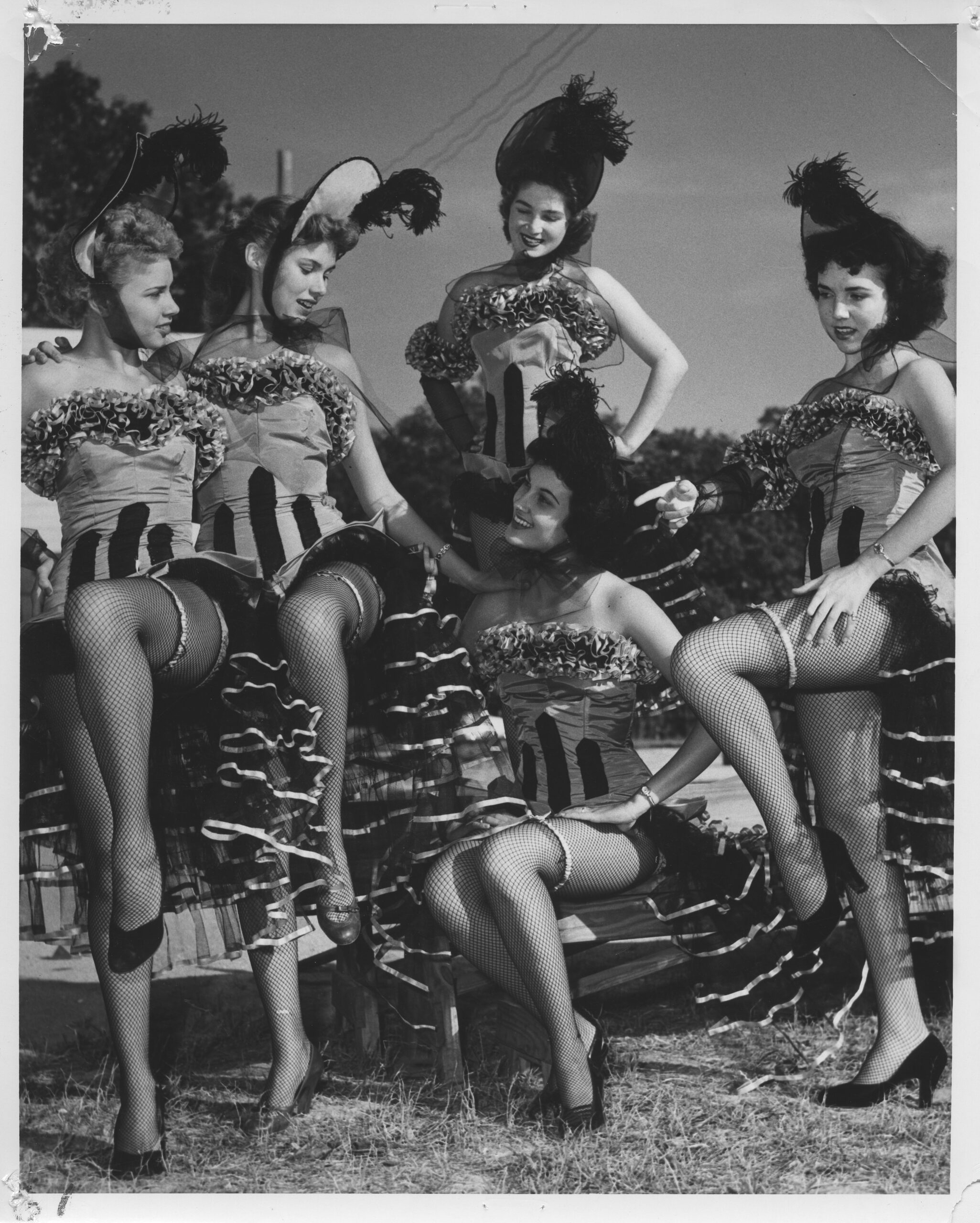
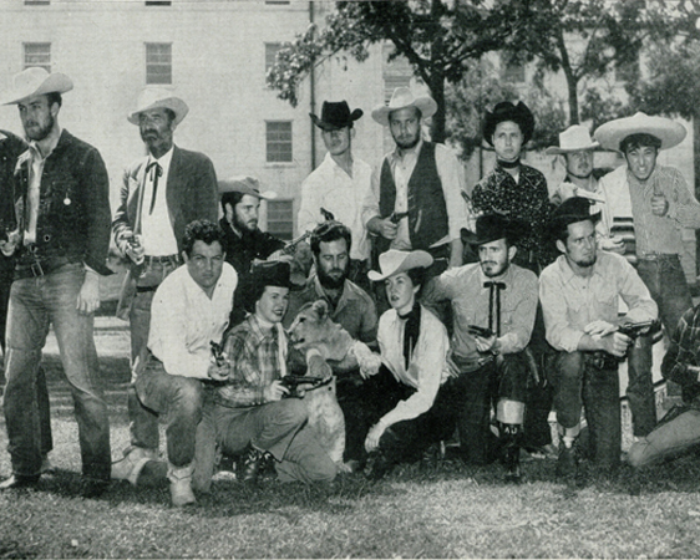
Among the most significant holdings within the University Archives are the President’s Office Records, which document the decisions and milestones of UH leadership; the Daily Cougar Archives, chronicling decades of student journalism and campus dialogue, and the Frontier Fiesta Collection, preserving photographs and other memorabilia from one of the university’s most beloved traditions. The UH Buildings and Grounds Collection also provides a vivid look at the physical growth of campus, from its earliest classrooms to the modern skyline that overlooks the University today. Together, these collections ensure that the voices, stories, and achievements of the UH community are preserved for generations to come.
Modernization did not stop at collections. The M.D. Anderson Library evolved into a fully equipped digital ecosystem. Today, technology enhances study rooms featuring screen sharing capabilities, multimedia studio support, podcasting, and video creation. Such updates reflect the ongoing mission of the library to meet students where they are with collaboration and creativity as well as by offering technology that advances student access. The real legacy of M.D. Anderson Library lies not in its architecture or its collections but in the generations of students it has touched. Guided from its earliest days by individuals committed to access, equity, and scholarship, the library has grown from a small collection at Houston Junior College developed through the ceaseless labor of Ruth S. Wikoff.
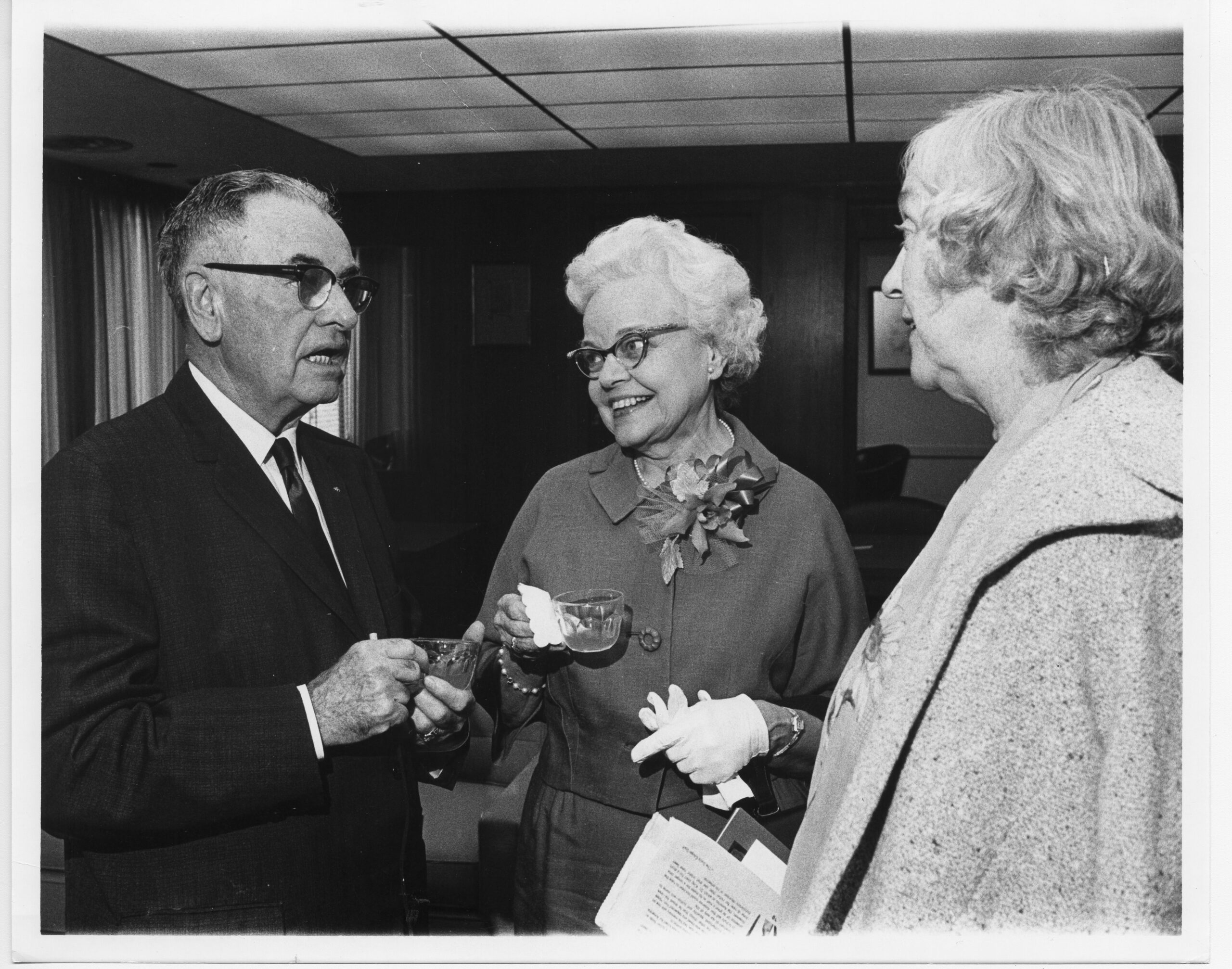
Wikoff led the library from 1933 until her retirement in 1973 and forged the core of what developed into one of Houston’s most crucial educational resources. Additionally, trailblazer Dr. Charles D. Churchwell, who started on September 1, 1967, became the assistant director for Public Services of the library and the first African American hired at the University of Houston in a professional status. His arrival marked an important moment in the University’s journey toward inclusivity and representation, making certain that the library remained a place where all voices could be heard and valued.
By the time the 1,000,000th volume was added to the collection in 1977, as part of the dedication ceremonies for the John H. Freeman Wing (now known as the Brown Wing), the library had grown far beyond its humble beginnings. The collection symbolized the tireless dedication of those who had built and preserved it. Beyond the physical expansions, the library has long played a role in cultivating community and scholarship. The Friends of the Library organization, once one of the University’s most influential support groups, was instrumental in growing the collection for decades by hosting events, lectures, and fundraisers that connected donors, scholars, and students. These gatherings transcended the many volumes; they celebrated the spirit of discovery that defines UH.
The library has also been the place that marked many personal milestones from students pulling all-nighters before exams to faculty presenting research that shaped their fields and alumni returning to the study spots that once defined their college years. Every generation has its own version of M.D. Anderson Library, yet each shares the same memory, the hums of collaboration, the quiet focus, and the comfort of belonging. Whether it be hosting workshops, student exhibitions, or research, the library continues to be a gathering place that unites UH—where new students find their rhythm, where ideas take root, and where the past and present can coexist in harmony.
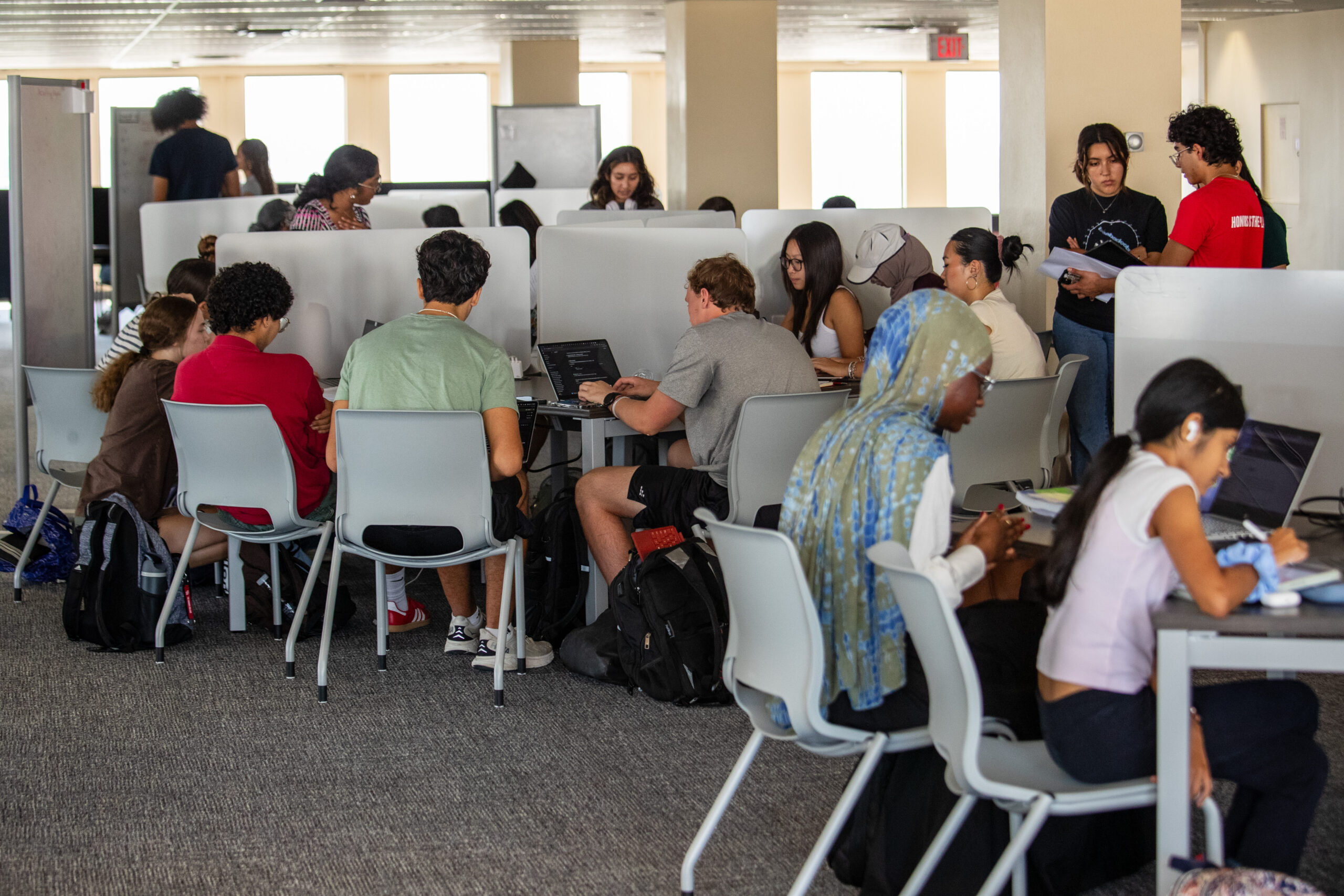
As M.D. Anderson Library turns seventy-five, it stands not as a relic of the past but as a blueprint for the future of learning. The library’s vision for its next chapter centers on a journey of reinvention. Dean Christina H. Gola is leading a big idea known as the Reimagined Library that will drive the development of modern, inspiring spaces designed to meet the needs of students, faculty, and scholars. Student and faculty success depends on access to modern, flexible spaces for studying and collaboration. Thus, M.D. Anderson Library has added new, contemporary furniture to floors 1, 7, and 8 at. Inspired by student feedback reflecting preferences for a variety of study seating options and consistent with the Reimagined Library vision, the space refresh began in September 2024 with floor 1. There students can choose from relaxed, counter-height, and laptop-friendly, soft seating. More recently, the library added 160 seats to floors 7 and 8, including single-user carrels and rounded pods, as well as tables with privacy screens. Students and researchers can enjoy inspiring views of the university and the city from these floors.
Amidst the renovation, the heart of the library remains the same as a place where students come to find out who they are, and where the opening of a laptop or a book could mean a world of possibilities. In many ways, the story of M.D. Anderson Library mirrors the story of the University of Houston itself: one of grit, resilience, and transformation. From its humble beginnings as a borrowed room in a high school to its current status as an information and learning hub, the library’s journey proves what can be achieved when vision meets perseverance.
With this in mind the library looks toward its next chapter, carrying forward the legacy of those who have built it: Ruth Wikoff’s resolve, Dr. Churchwell’s pioneering spirit, and the countless students who have called the library their second home. M.D. Anderson Library stands ready to welcome the next generation of Coogs in continuing its mission of knowledge preservation, inspiring discovery, and connecting the past with the possibilities of tomorrow.
Lexi Gaddis is a marketing communications assistant at M.D. Anderson Library who studies marketing and entrepreneurship at the University of Houston, with a passion for innovation, storytelling, and highlighting student experiences that shape campus life. She has worked at the library since her freshman year, is part of the Wolff Center for Entrepreneurship, and recently accepted a summer internship at Forthea.
To read the full story, click here.

Click here to listen to 50s-era radio spots & film footage from the 1953 Frontier Fiesta in the University of Houston Special Collections.
Explore M.D. Anderson’s catalogue, collections, repository, and more!
 Follow