
By Marie Theresa Hernández and Brian Riedel
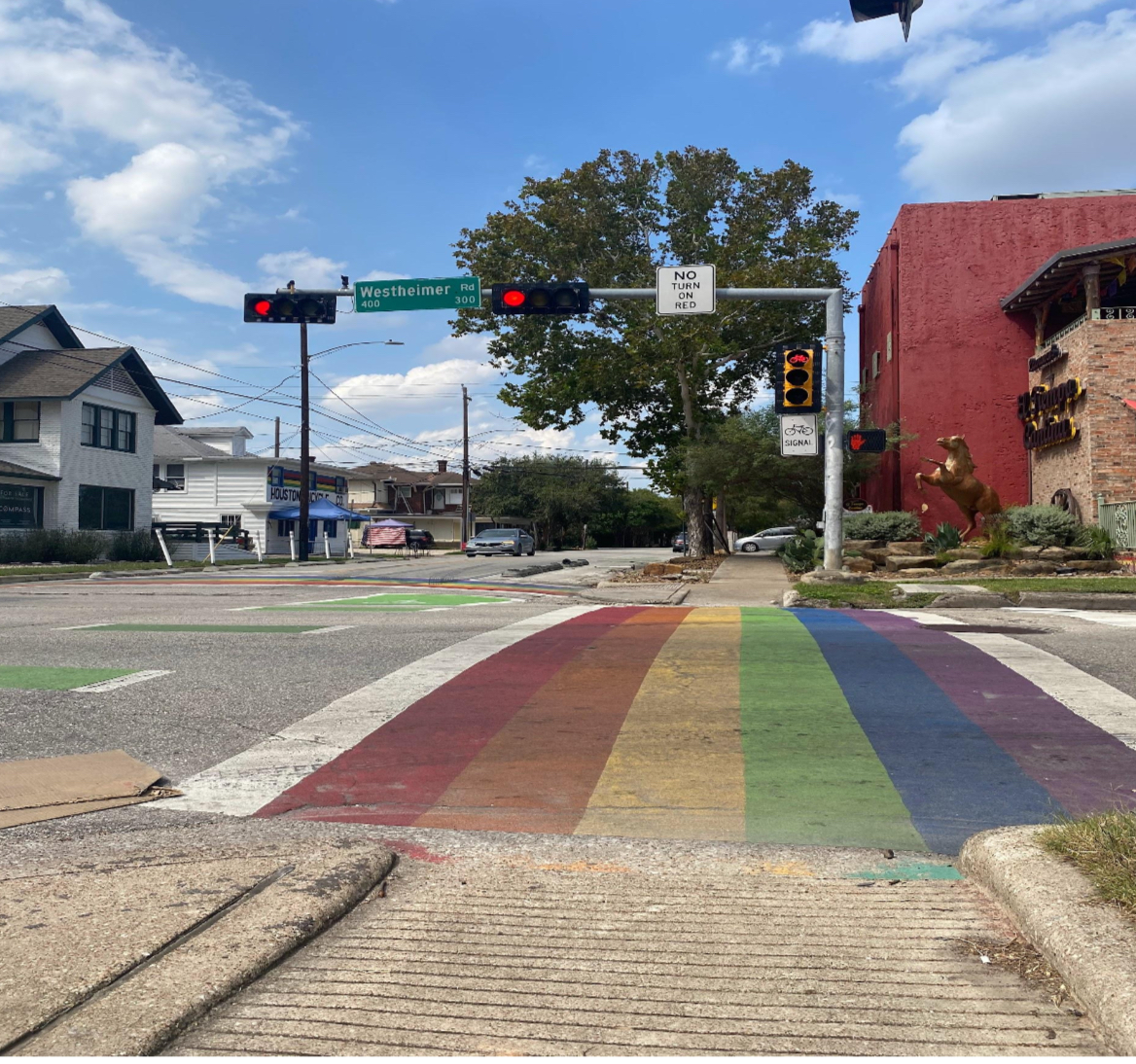
Most people who know Montrose think of it as a hip community with interesting restaurants and artsy neighborhoods. The University of Houston (UH) photography students from Global Studies and Anthropology were energized by their visits there during the fall of 2024. It felt to them like a place where people of diverse backgrounds lived and worked, and where, at least initially, the students admired the neighborhood’s advocacy of its LGBTQ+ community. Because of this, the students felt they could comfortably fit in there.
As we walked the different streets – Westheimer, Lovett, Hopkins, Fairview, and others – the students were awed by the restored Craftsman homes, the eclectic gardens, and the public artwork. Their interactions with neighborhood residents were informative and welcoming, especially with a man named Martin who lives on Hopkins in his meticulously restored century-old cottage.
Yet Montrose is much more than what we saw on our early visits. Its history as a streetcar suburb began in the early twentieth century. In 1912, John Wiley Link constructed the Link-Lee Mansion that became the showcase of the University of St. Thomas, which purchased the home in 1940. Most of the UH students had previously seen the mansion. Nevertheless, its ornate detail mesmerized them, and they photographed its essence with vigor and boundless creativity. They then viewed the many other opulent homes that were part of the neighborhood’s early development and learned of the Jim Crow policies that the 1948 Shelley v. Kraemer decision partially restrained, and the federal Fair Housing Act of 1968 abolished.
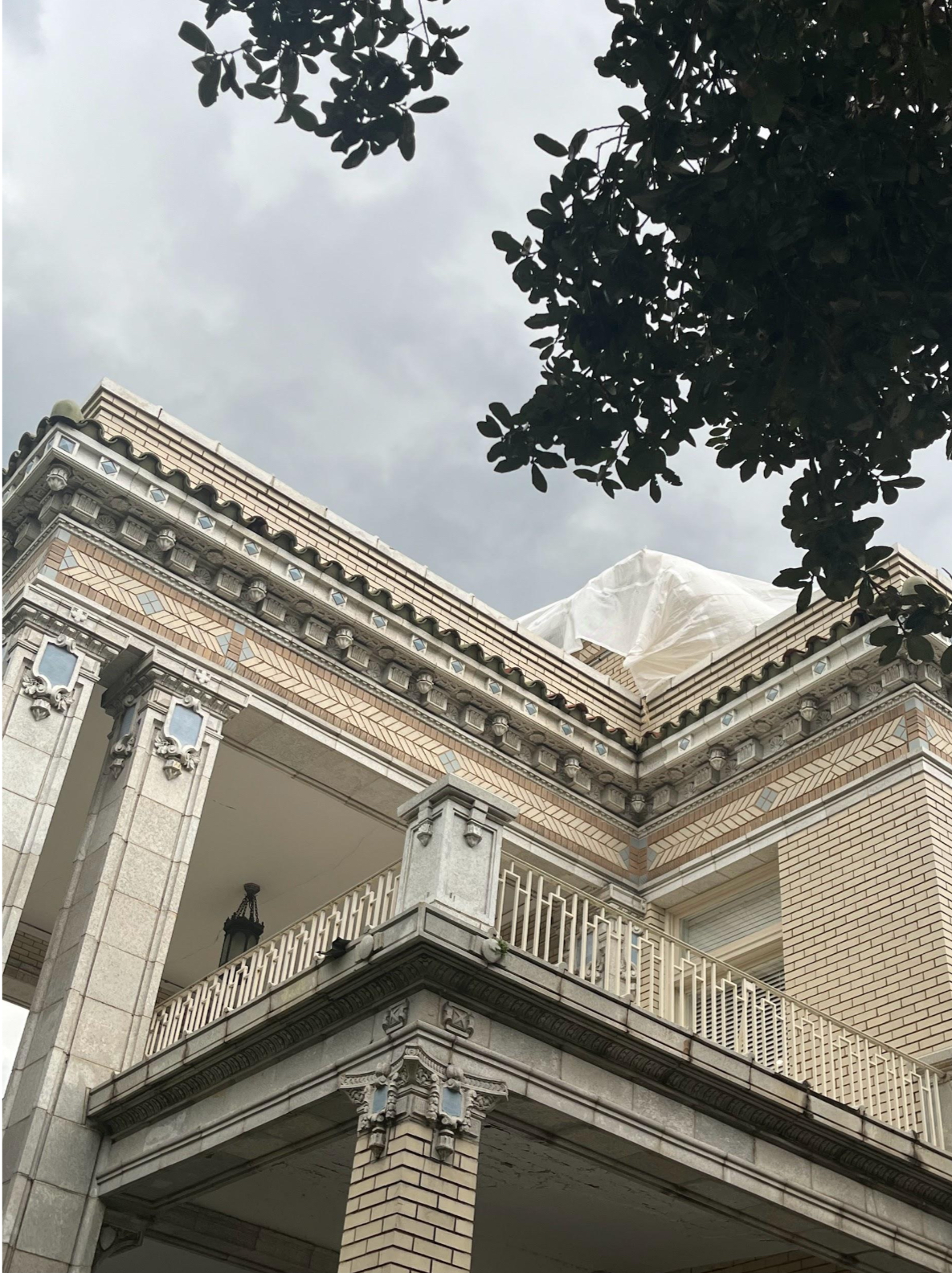
Perhaps it is not surprising that the developments during the 1960s that established Montrose as a “gay” enclave grew in response to these early policies that kept out so many people, except the servants and groundkeepers – people of color who entered through the mansion’s back doors. Many significant events and locations of the national LGBTQ+ movement (such as the bar Mary’s) were in Montrose.
In the twenty-first century, Montrose has a multi-layered identity. Its history as a home for early twentieth-century, ultra-wealthy, white Houstonians has given way to its reputation as a gay neighborhood in the minds of most Houstonians. What most people see today are the busy streets with offbeat coffee shops and exceptional restaurants. Yet what caught the eye of the students were the brightly painted traffic signal boxes with scenes from the neighborhood and stop signs with stickers announcing everything from records to revolution.
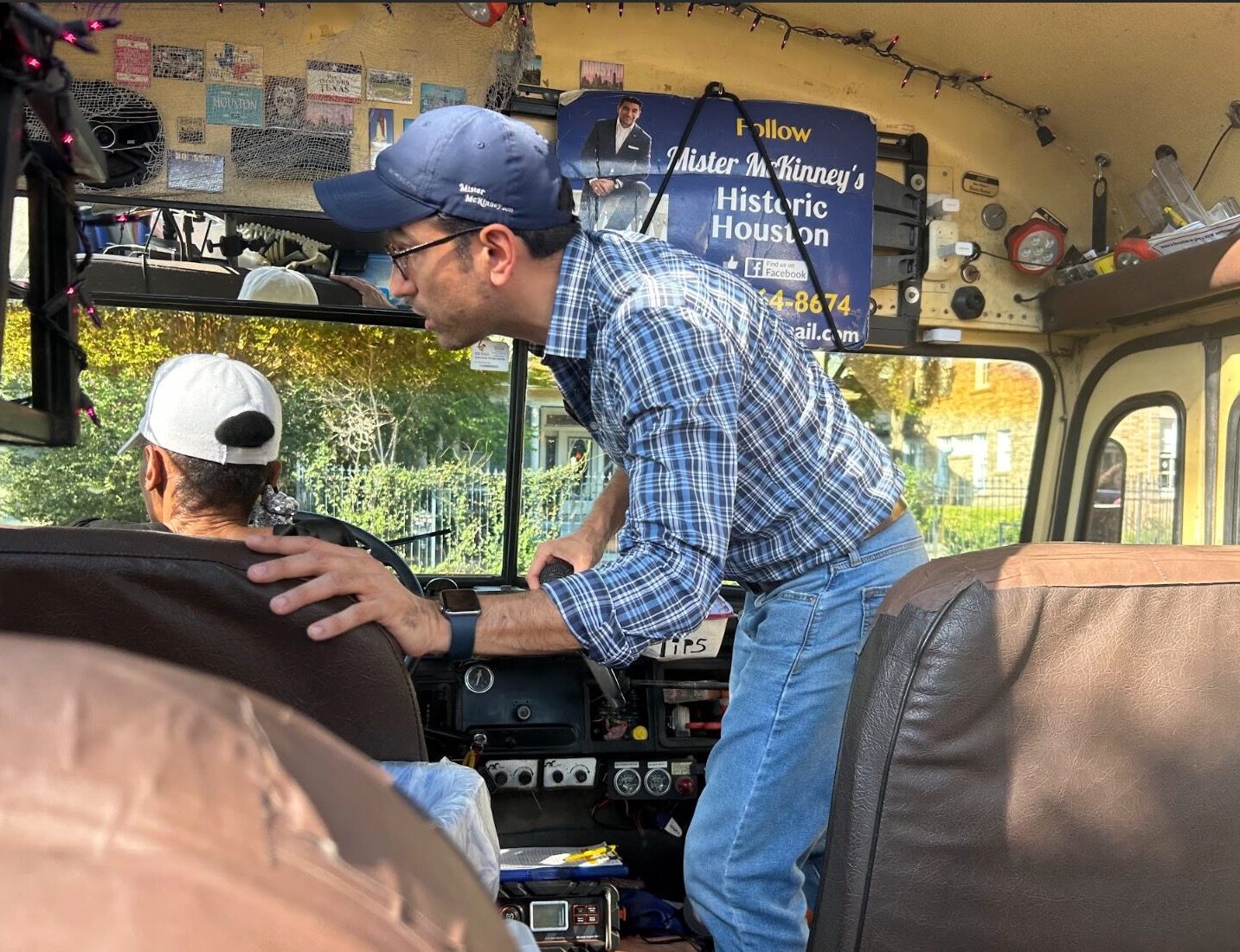
The photography students from the Global Studies and Anthropology Department and Houston History thank Mr. McKinney for his wonderful Historic Houston tour of the Montrose neighborhood. Photo courtesy of Umar.
To read the full story, click here.
Click here to access the Gulf Coast Archive and Museum (GCAM) Digital Archive to learn more of Montrose’s LBGTQ+ community.

Click here for things to do in the Montrose neighborhood!
 Follow