
By Adithi Nythruva
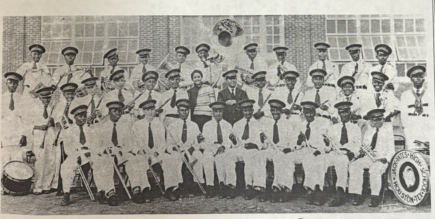
The year 2026 marks the centennial of Jack Yates Senior High School. Initially named Yates Colored High School, it opened with seventeen teachers and 600 students and has ushered in significant progress over the past century, from providing academic opportunities to fostering acceptance among those affiliated with it. The school’s progression paralleled the priorities of its namesake, Reverend Jack Yates, a prominent civic leader and Baptist minister, who “emphasized education directed toward the youth as the future.” Among the many areas of instruction Yates High School offered in keeping with this ideal was a robust music program that recognized the value of arts to a well-rounded education.
Since the early twentieth century, music has transformed Houston’s culture and woven together a tight-knit community amongst the growing African American population. During the early 1920s, blues and jazz music became increasingly popular. For several musicians, Houston acted as a hub where they could congregate and perform for paying audiences. As more musicians performed publicly, a viable music scene coalesced within the city.
Like other U.S. cities, Houston witnessed the emerging Jazz Age, and local African American musicians leveraged this to express their vulnerable perspectives through music. Historian Tiyana Steptoe explained, that they tackled “black sadness and sorrow, black agony and anguish, black heartache and heartbreak without fully succumbing to the numbing effects of such misery—to never allow such misery to have the last word.” By expressing their authenticity, these musicians connected with and amplified their community, exercising black autonomy in a highly polarized society that often diminished their perspectives.
Local high schools and their initiatives became notable contributors to the flourishing Houston Jazz Age. Jack Yates, Phyllis Wheatley, and Booker T. Washington High Schools provided aspiring African American musicians with a formal musical education, tailored to their needs and interests. Through a proper structure, young musicians could “study music, form bands, invest in instruments and achieve success in their careers.” These musicians were so well trained, that during the 1930s, venues, such as local ballrooms and theaters, hired them to perform for the same audiences entertained by professional musicians.
Yates High School’s music programs demonstrated their capacity to support emerging talent and produced a significant number of the young performers in those spaces. As a cornerstone of Houston music education for African American students, these programs brought out the best in students, faculty, and alumni. Assessing the school’s band, choir, and orchestra programs offers a nuanced understanding of Yates’s history and the continuity of music education in Houston.
Dr. Charles B. Johnson: The Beginning of Jack Yates Band
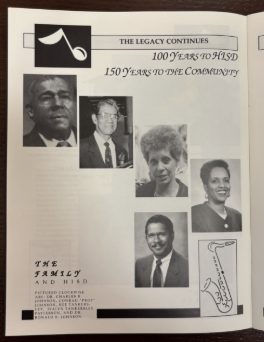
Beginning with Charles B. Johnson, the Johnson family has become intertwined with Yates High School history across three generations teaching at Yates and in HISD. Photo courtesy of Conrad O. Johnson Collection, African American Research Center, Houston Public Library.
In 1931, five years after Yates High School proudly opened its doors, the school established its band program led by Charles. B. Johnson. In its first year, the band program included thirty-six players, a relatively large number for a new program. A practicing dentist by profession, Dr. Johnson was also an accomplished trumpet player, flutist, and vocalist who wrote the song, “Houston Is A Grand Old Town.” Dr. Johnson’s teachings were directly attributed to his personal morals and the dynamic of his family, who “always had a big heart, so there was always room for one more plate at the table.” During his time at Yates, Dr. Johnson “instilled in young people a love of jazz, and the determination to become good musicians, good students, and good human beings,” a sentiment carried forward by several of his students, including his own son, Conrad O. “Prof” Johnson.
The Johnson family and their legacy were critical to Yates High School’s success. Dr. Johnson was the first of three generations of family members who taught at Yates and in the Houston Independent School District (HISD), and two generations who graduated from the school. Not only did Johnson’s son follow in his footsteps as a band director at Yates, but Dr. Johnson’s daughter, Sue Tankersley, taught in HISD for over thirty years. And his grandson, Dr. Ronald Johnson, became the school’s principal in 1990. By 1991, the Johnson family had amassed over 100 years of service to HISD and more than 150 years of service to the Houston community.
From his earliest days at Yates, Dr. Johnson and his teachings fostered a sense of community and motivation that subsequent band teachers naturally embraced, carrying the Yates musical spirit forward in their instruction. In 1941, The Yates Band, led by director Abner Jones, received several compliments from The Lion yearbook staff for their programs and played at two concerts. The Lion also commended Jones for his “untiring and faithful efforts in working with the members.”
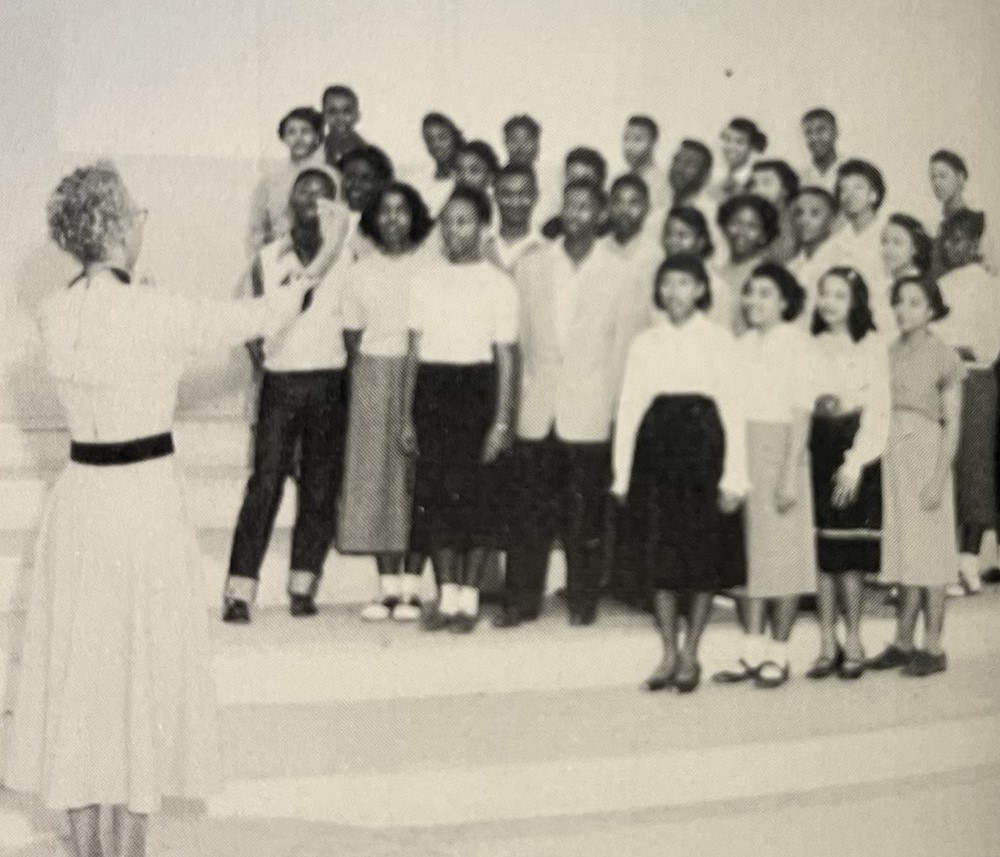
In 1941, Prof Johnson left his professional career as a renowned jazz saxophonist and composer to become a music educator. In 1945, he led Jack Yates Band and served as director until 1947. Prof consistently credited his success to his father and the way his father had trained him. Dr. Johnson inspired his son, “playing the flute at home” after work and leading Prof to realize that “he wanted to become a musician.”
A 1933 graduate, of Yates High School, Prof Johnson developed a unique versatility as a band leader and a band member during his secondary schooling, and, as band director, he used his talents to mentor his students. Paralleling his father’s efforts, Johnson helped his own students become successful jazz musicians. Even though much of Johnson’s success has been centered around his work at Kashmere High School and its renowned jazz band, Johnson’s core foundation in teaching and leading music began during his time as a student at Yates.
This transition from secondary student to influential musician was not exclusive to Johnson. For example, Yates alumnus and saxophonist Eddie “Cleanhead” Vinson developed his musical talents as a Yates student and traveled with Chester Boone’s Territory Bands in the summer, before making his first professional recordings in the early 1940s. The successes demonstrate that Yates musicians were dedicated to making their musicianship known and, ultimately, fostering a strong community amongst the future generations of musicians.
To read the full story, click here.
Click the video to watch the Jack Yates Marching Motion band perform with Texas Southern University’s “Ocean of Soul” marching band
Click the video to listen to I Can See Clearly Now by Johny Nash, a Yates alum who was part of the music program!
 Follow