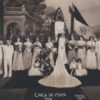
Highlighting the service and economic contributions of Houston’s African American community, the De-Ro-Loc Carnival was a direct response to Houston’s No-Tsu-Oh, which excluded African Americans from participation.
The Latino Art Now! Conference is the signature event of the Inter-University Program for Latino Research (IUPLR), a research consortium of twenty-six university-based institutes and centers dedicated to addressing the issues impacting Latinos. The University of Houston’s Center for Mexican American Studies is now the new headquarters of the IUPLR and Pamela Anne Quiroz serves […]
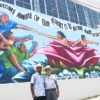
Baptist minister James L. Novarro and fellow activists left Houston in the sweltering Texas heat in July of 1966, traveling several hours to Rio Grande City in Starr County, where they marched in soldarity with local farmworkers seeking a fair wage. These laborers galvanized national attention when they organized a strike followed by a march, […]
In early 2018 archeologists located the skeletal remains of ninety-five individuals on a Fort Bend Independent School District (FBISD) construction site. Buried in wooden caskets, the deceased are believed to be former slaves forced to work in sugar fields as convict labor on the Imperial Prison Farm. Texas leased out convicts from 1878 to 1910, […]
What is Houston’s DNA? By Debbie Z. Harwell “Discover your ethnic origins,” find the “source of your greatness,” trace your “health, traits, and ancestry,” and “amaze yourself…find new relatives.” Ads proliferate from companies like AncestryDNA, 23andMe, and MyHeritage enticing us to learn more about who we really are. People who send a saliva sample for […]
Founded in 1924, El Club Cultural Recreativo México Bello became a model for many local Mexican American organizations. Still operating today, it reached success and notoriety among Houstonians by creating a familiar environment for Mexican immigrants–a home away from home–and introducing Mexican culture to non-Mexicans. In the process, it made a lasting imprint on Houston’s […]
by Denise Gomez A small red building stands out on Navigation Boulevard, luring customers inside with the mouthwatering scent of freshly cooked tortillas. Upon entering, the restaurant’s loyal customers see red and white walls decorated with honors and recognitions, one of Houston’s best menus, and, usually, a line. The family-owned restaurant Villa Arcos was […]
Although Houston is celebrated as one of the nation’s most diverse cities, it was largely segregated with little intersection across race and ethnicity into the mid-twentieth century. Mexicans and Mexican Americans settled initially in Second Ward, but, as their numbers grew, they moved into First, Sixth, and parts of Fifth Ward, as well as Magnolia […]
“You never forget the Bracero experience,” former bracero Aurelio Marin commented, perfectly summarizing the triumphs, tribulations, and turbulence of America’s highly-controversial and highly-impactful Mexican Farm Labor Program Program, commonly known as the Bracero Program, which started in 1942 to supply able-bodied Mexican laborers to U.S. industries suffering shortages at the outset of World War II. […]
Mujeres Unidas, Taking the Initiative: The First Decade of Hispanic Women in Leadership By Christian Kelleher On March 11-13, 1988, about 200 women attended the YWCA Hispanic Women’s Leadership in Houston Texas, “Celebrating Excellence.” It had been ten years since the last of such conference. Soon after, twenty of those women, inspired by their experience […]