
by Don Looser
Just a scant memory ago is the era when legendary journalist and television reporter Walter Cronkite began his career in 1932 as a high school club reporter for the Houston Post. Before the advent of television, the newspaper was the primary purveyor of daily information and the chief molder of public opinion. Only newspapers had the multiple layers of news journalists, syndicated columnists, arts critics, fashion editors, society reporters, gossip columnists, and sports writers to compile a comprehensive, qualitative product on a rigid daily timetable. Multiple updated daily editions kept the news current. The newspaper was the heartbeat of the city.
In downtown Houston, news runners for the Houston Press raced to beat the 2:00 p.m. deadline for the evening edition to best the Houston Chronicle. Cronkite described the Post city room “littered with the wadded remains of…rejected leads. The air hung heavy with smoke. The din was frightful as the deadline approached and typewriters clacked, linotypes clinked, and telephones clanged.” Houston was blessed with a wealth of spectacular writers, including O. Henry, Hubert Roussel, George Fuermann, Leon Hale, and future novelists David Westheimer (Von Ryan’s Express), Larry McMurtry (Lonesome Dove), and William Broyles (Apollo 13).
Early in the twentieth century, Houston boasted three newspapers with distinctive personalities. The oldest, the Houston Post, was founded in 1880 by Gail Borden Johnson. The legendary Post journalist Marcellus E. Foster established the Houston Chronicle in 1901. With gains from the Spindletop oil boom, Foster also founded the original Houston Press in 1911. The Chronicle’s erudite editor Zarko Franks called the pugilistic Press “the jazzy old lady of Texas journalism.” In downtown Houston, one could buy a newspaper on virtually every street corner. The sassy, no-subscription Press “tattled, slugged it out with the high and mighty, harassed faith healers, and loved kids and dogs … She screamed headlines, and never ignored a fight at the Cork Club.” Columnist Wanda Orton observed, “Everyone loved the old Houston Press, although not everybody would admit it.”
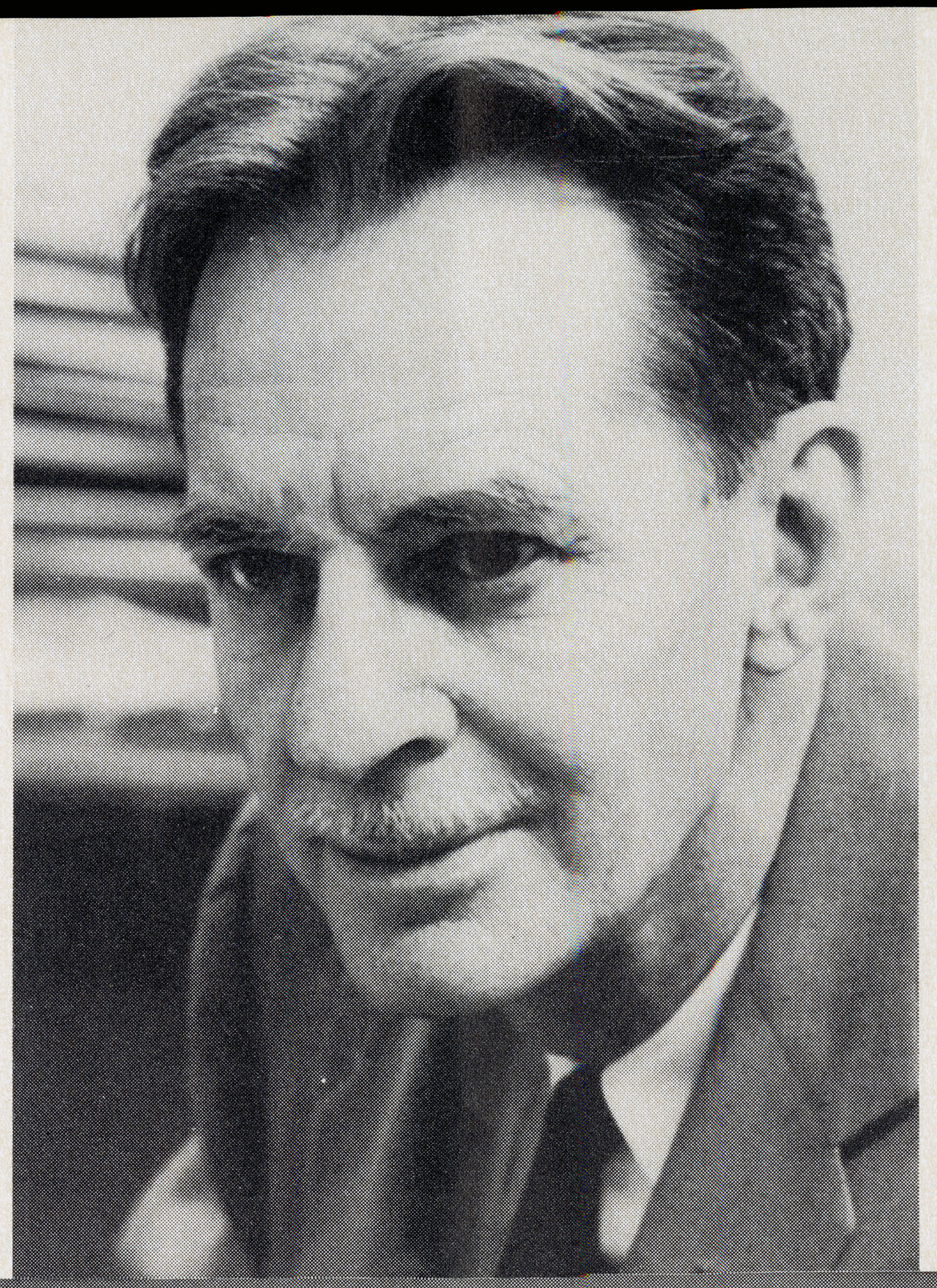
The counsel of the Chronicle’s scholarly Zarko Franks seemed to permeate local journalism, “Write it tight, but don’t sacrifice the lover’s sigh, the laugh, the tear.” The Post boasted the eccentric, Latin-reading, piano-playing philologist Hubert Mewhinney. The Houston Press featured Sig Byrd’s column “The Stroller” that lent dark, Runyon-like prose about Houston’s inner-city underbelly. Press readers also relished Maxine Mesinger’s column “She Snoops to Conquer” with her “showbiz lingo” reports of swankiendas and playcations. Moreover, the cultural scene was fostered by a cadre of gifted journalists—Wille Hutcheson, Ina Gillespie, and Hubert Roussel.
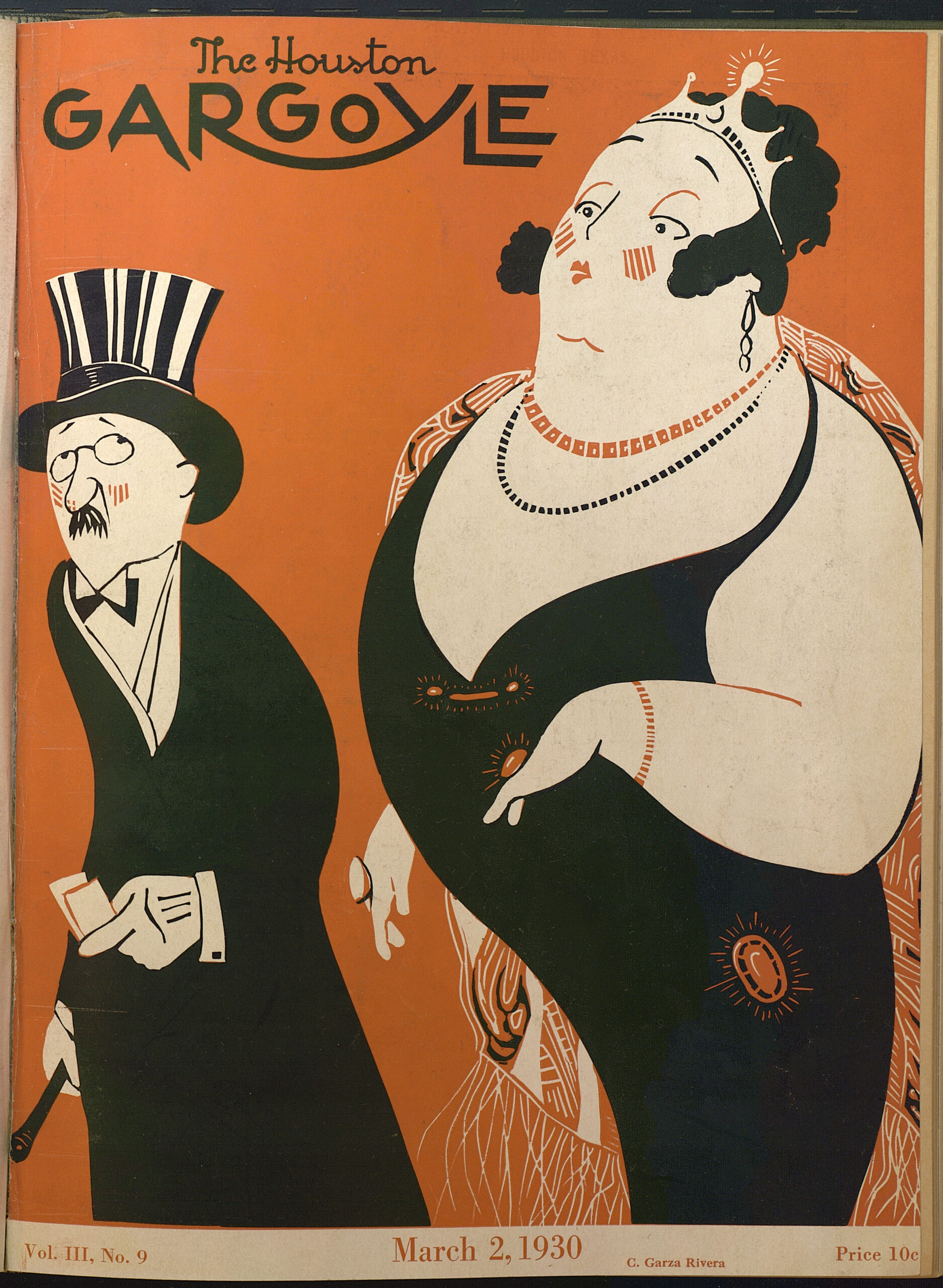
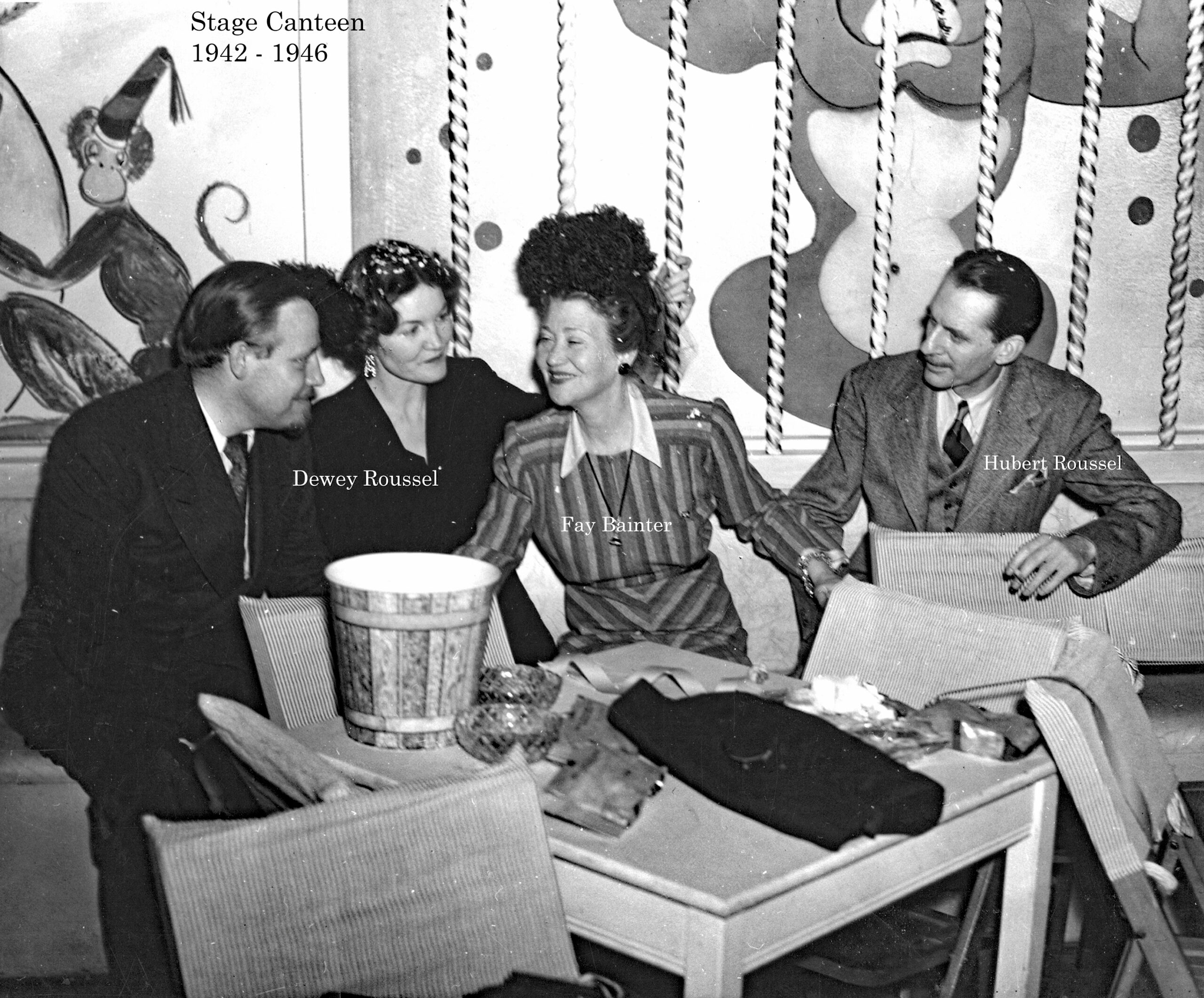
In the period of 1928 to 1966, Hubert Roussel was the man whose contribution was so monumental that it virtually defied measurement. Roussel was born in 1897 in Houston after his parents left behind the seat of their French ancestry in Louisiana. He was educated in New York City and served on several magazine staffs there, absorbing the city’s literary style. He returned to Houston in 1928 as an associate editor of The Houston Gargoyle magazine, successfully modeled after the sophisticated The New Yorker. Much of his early journalistic attention focused on the lively Houston Little Theatre where his wife, Dewey, was president. Roussel then worked for the Houston Press from 1932 to 1937 and later served with “unchallenged distinction” as critic of music and drama at the Post from 1937 to 1966.
For Roussel, culture was a profession. He became a legend among Houston journalists for his acerbic wit, his bold advocacy for cultural progress, and his eloquent writing. Roussel’s colleague George Fuermann described him as a “brilliant, opinionated, wispish, crotchety jack-of-all-critics.” Fuermann viewed Roussel as “a generally dour gentleman whose other talents included one of the most facile journalistic styles in the South and a temperament that was never introduced to indecision.” He was “a brilliant critic of films, the stage, ballet and music… wise without being smug, incisive and witty, with never a wrong or wasteful word,” wrote novelist David Westheimer. Roussel’s wit could pen such an alliterative theater description as “rosy, ribald, and raffish,” then in turn summarize a concert by the Houston Symphony guest conductor Modest Alloo as “Much Alloo about Nothing.” After a concert by the Metropolitan Opera diva Helen Traubel, Roussel lamented, “Nobody knows the Traubel I’ve Seen.”
During most of his career, Roussel reviewed virtually every downtown performance. His prickly columns appeared promptly in the paper the next morning. Historian Walter Rundell, Jr. observed, “To a large extent, the Houston audience was educated by the columns of Hubert Roussel. The success of great music in Houston must take into account his signal contribution.” On days when there was no concert, his concert reviews frequently took the form of imaginary conversations with Fleecie, the “goddess of the cigar counter,” in the Rice Hotel lobby. Fleecie represented what Roussel thought the average concertgoer might have felt about the last night’s program. In one review concerning contemporary repertoire, Fleecie reported that her friend said the orchestra didn’t play anything familiar. The more she heard, “the more she felt dizzy inside, like listening to Liberace, but worse.”
Roussel’s wit was sharp and to the point. After a production of Faust, in which theatrical flash powder mistakenly ignited Faust instead of Mephistopheles, Roussel labeled it “A Victory for Satan.” He once admonished, “You have to play a symphony to be one,” and later, “This reporter has never encountered a rendition of any work that sounded less like Beethoven wrote it.” Roussel observed that one Alley Theatre production “… could have left no one doubtful of its hold on insignificance.” Moreover, he chronicled what he labeled as André Previn’s “temperamental afflatus.”
Leon Hale recalled, “The Post had truly literate people like Donald Barthelme and Hubert Roussel. Unknown to him, I became Roussel’s student. I studied every sentence he wrote. I thought it so wonderful he could compose those soaring reviews of symphony concerts and, in the next breath, produce one of his light pieces on Fleecie. For me, a cup of coffee with people like that was a continuing education.” David Westheimer remembered, “Roussel was my first boss. From my first day he taught me how to write a story— ‘Just put one little word after the other.’” What appeared to be Roussel’s facile gift of expression, however, was the result of his uncompromising refinement. Colleagues reported that Roussel’s wastebasket was always full of discarded versions of his prose. “His columns were painfully wrought but seemed effortless.” Donald Barthelme recalled, “When ‘Mr.’ Roussel wasn’t happy with [an associate’s] article, he’d punch a buzzer on his desk summoning George Christian or me for a harsh scolding.” So intense was his commitment to language that he once filed off the comma key on the typewriter of an assistant whom he accused of its overuse.
Roussel’s praise was equally powerful. He could glorify with the headline, “Stokowski Opens Season with Triumph” or “Britannia Rules Again: Barbirolli in Charge.” He could also express his own intimate feelings. After a concert by the regal contralto Marian Anderson, Roussel wrote that she had given him “…the thrill of a lifetime. I cannot explain Marian Anderson. Hearing from the dark woman who stands tall and immobile…yet throbbing with the passion of human inspiration…is the most dramatic experience I have had in 30 years of attending the theater.” For Miss Anderson, Edna Saunders broke historical precedent and seated African American guests on the main floor of the City Auditorium. Houston’s mayor sat with Edna Saunders in the African American section. For Anderson’s visits, Saunders personally housed the famed contralto who would enter the Saunders home only through the back door.
To read the full story, click on here.
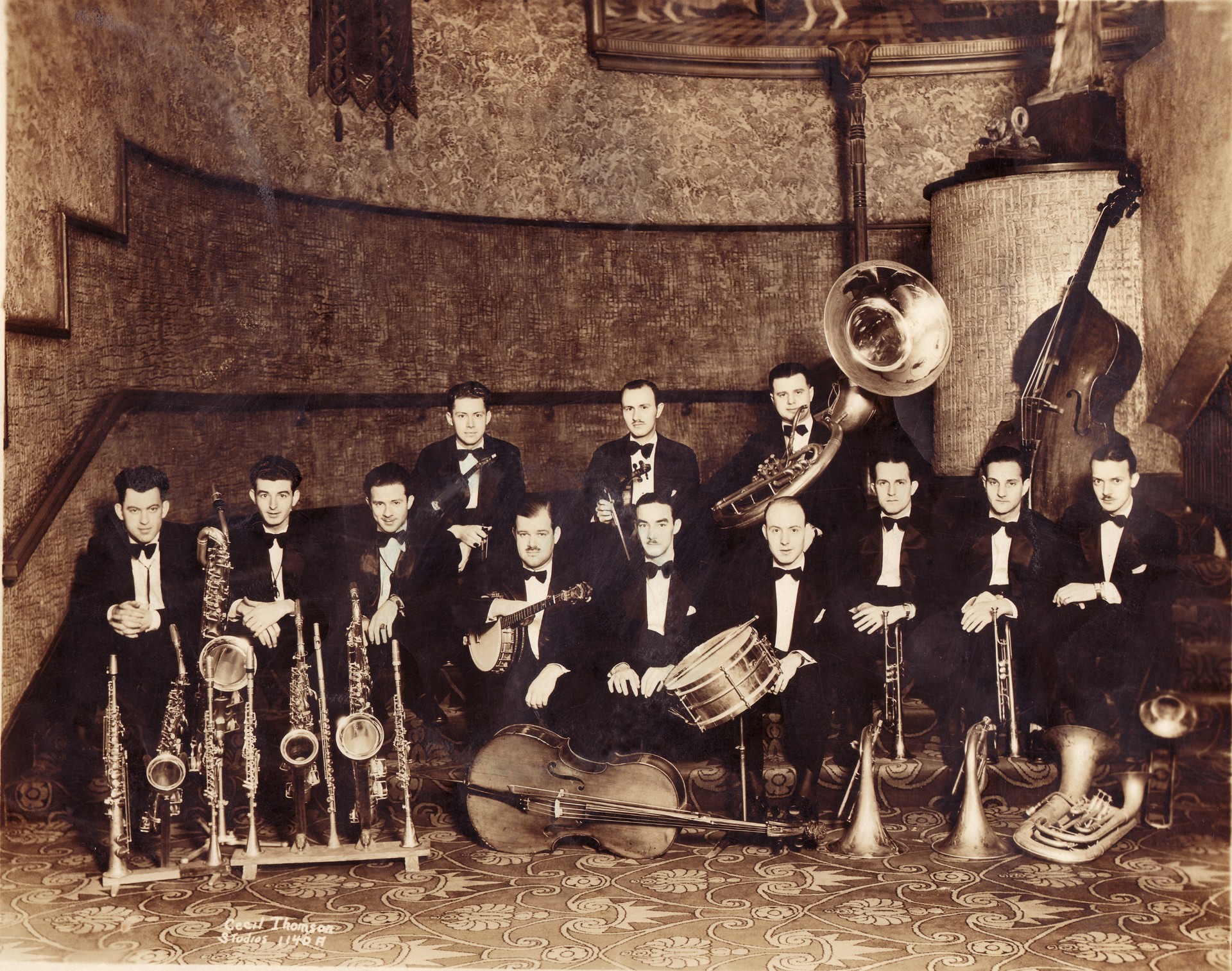

Click here to check out “A Musical Renaissance: The Growth of Cultural Institutions in Houston, 1929-1936.” Another article about Hubert Roussel and the Houston Symphony, also written by Don Looser!

Click here to check out an article about the history of the Houston Symphony Orchestra by the Texas State Historical Association.
 Follow