
by Debbie Z. Harwell

“Mr. Holland … spoke out about what he thought was best for his students no matter what it was, no matter to whom he was speaking, he did not bite his tongue about what was right and wrong.”
– Deloris Johnson, Yates Class of 1958
When William S. Holland took on the role of principal at Jack Yates High School in 1941, he stepped into big shoes, as the school and its first principal, James D. Ryan, had a built reputation as being central to the support and development of Houston’s Third Ward. The high school opened in 1926 as the city’s second “colored” high school and Ryan, an East Texas native and seasoned local educator, served as the school’s head until his death in 1941, when Holland succeeded him. During these years, Yates set an expectation of success and acted as the community’s anchor.
The original building located at 2610 Elgin Street was both a social hub and educational institution. It hosted meetings and community events for the bustling neighborhood and welcomed students in grades seven through twelve. Built to accommodate 1,600 students, by the mid-1950s Yates’s student body exceeded 2,200. Overcrowding threatened Yates’s survival, but Holland kept the school operating until a new facility could be constructed. The new building opened in 1958 at 3703 Sampson, just a mile away. It should have been an improvement but, instead, marked a reversal from the school’s position as a guiding force for the community.
The Houston Independent School District (HISD) board replaced Holland with Dr. John Codwell, the principal of archrival Phillis Wheatley High School – an act that destroyed the community’s cohesiveness and hampered its leadership. Desegregation in the 1960s sealed the community’s fate as the neighborhood and the school saw a decline, but Third Ward’s heritage and the memories of Professor William Holland remain alive.
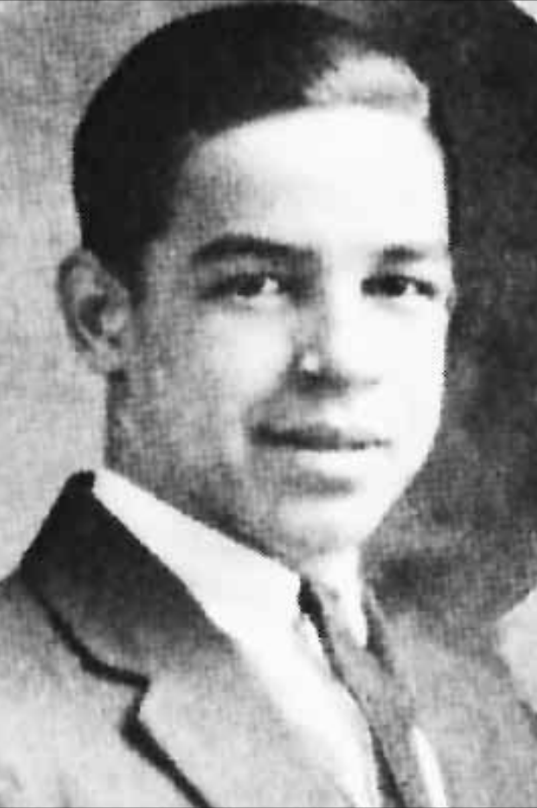
William S. Holland
William “Babe” Holland, born in Terre Haute, Indiana, on March 2, 1904, graduated from Indiana State Normal School in 1925. He attended graduate school at Tennessee State College and Indiana State Teachers College (formerly the Normal School, now Indiana State University). He played baseball, basketball and excelled in track, competing in the decathlon. His son, Bill Holland, said that white athletes from other schools would pick one or two athletes and throw their points to them to keep his father from winning. As a result, William Holland learned “early on that there are things that you have to overcome. You either give in, or you overcome.”
Holland came to Houston in 1927 with a letter of introduction from Birch Bayh Sr., athletic director at Indiana State. Edison Oberholtzer, then superintendent of the Houston Schools, hired him to coach at Yates where he led teams to the 1930 Texas Negro High School football title and numerous track titles. He was promoted to assistant principal and, later, principal on Ryan’s death. When Holland retired in 1974, he was the longest tenured principal in HISD’s history.
Though the national fight for desegregation and civil rights heated up in the 1950s, Yates 1958 class president, Napoleon Johnson, explained that nothing changed in Houston, so Yates students focused on graduating. Johnson remembered Holland speaking at assemblies and hearing “the pain in his voice because if he saw students acting in any way that was probably natural to some degree, … just too much play and not enough seriousness, he would get on the microphone, and he would tell us about how difficult it was going to be, and that [we] are going to have to be twice as good, work twice as hard … He was basically saying you need to wake up. You don’t have time to act the fool…. We can prepare you, but you’ve got to be serious about getting prepared.”

Reverend Donald Dickson, class of 1958, described Holland as a “personable administrator” and “a stern man … a principal who did not play with children, but he would do anything that he could to help children.” Deloris Johnson, who acts as the 1958 class liaison, described Holland as a “man of great courage, of great responsibility, [who] just led his students to perfection. He told us we had to be the best that we could be because there was going to come a time when integration would come, and we were going to have to be able to fit in … to be able to work in the world.” Edith Holland Nealy, Holland’s daughter, said he motivated students to go beyond what they thought they could do. “If you were having problems other than just being mentally off the pace, then you had a visit with him in the office to discuss your underachievement. There wasn’t a choice.”
Holland set the example, and teachers followed suit. Nealy recalled, “All of the teachers expected you to achieve… The parents were, I think, very happy to see that their children were being educated that way, that somebody really cared about their children.” Dickson agreed with that and explained that many of his teachers, who had also taught his mother, “would not allow you to fail… If it came to chastising you to get your attention … or come to your house to tell your parents that you weren’t getting it done, or tell the coach that you are not passing … you knew what was going to happen.” The students also worked for many of their teachers. Dickson cleaned his homeroom teacher’s house on Saturdays, wiping the windows and beating the rugs. “Our teachers lived in the same places where we lived …between school, and church, and home, the paths [we] traveled were well-watched— [The teachers] were just like our parents, our uncles, and our aunties.”
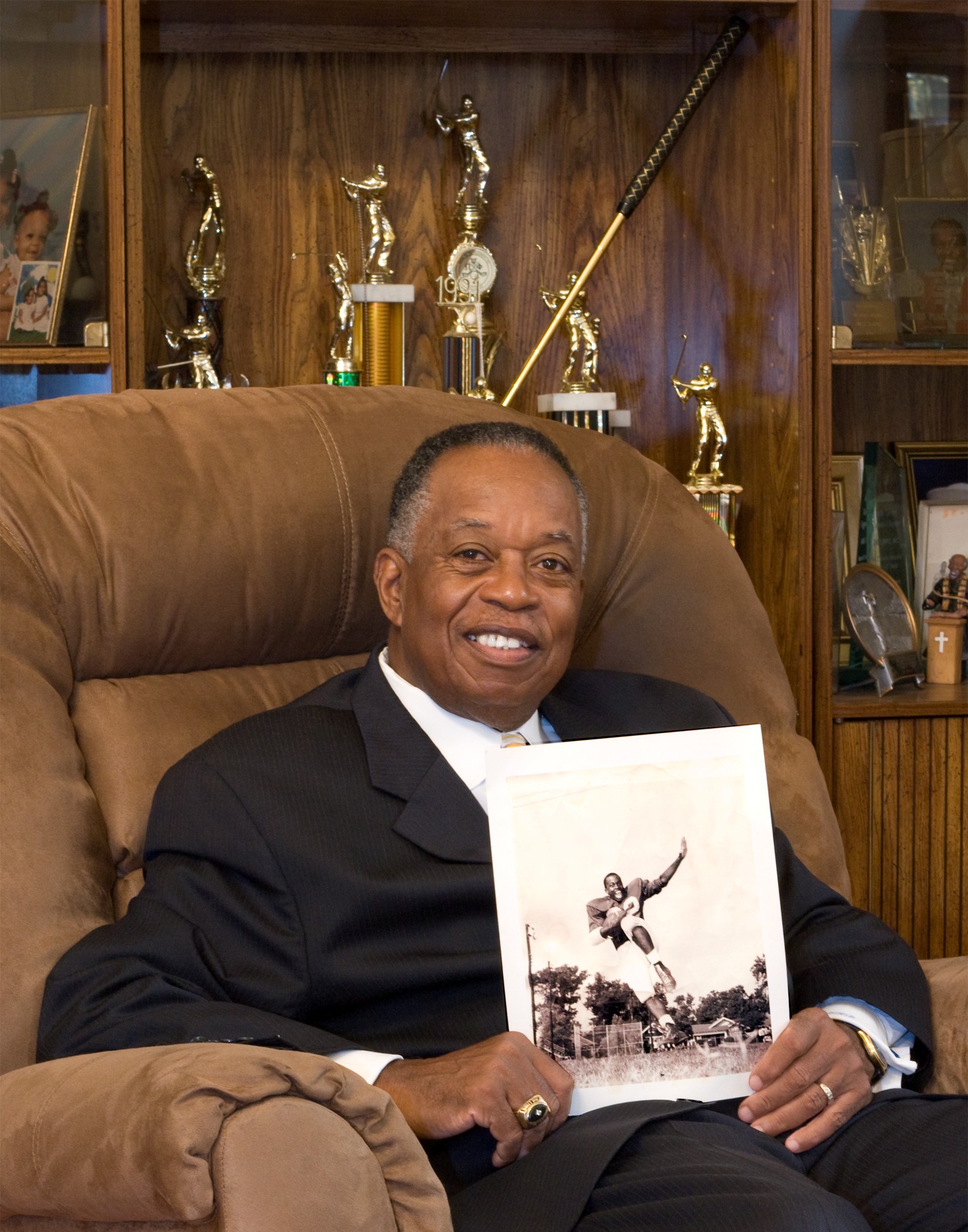
Yates graduate Judge Robert Anderson had the unique perspective of someone who experienced both integrated and segregated schools in the rural and urban South, as well as the North. Going to an integrated school in the North broadened his opportunities in many ways, including an expanded curriculum and field trips to Broadway plays. Nevertheless, Anderson noted, “The teachers at Jack Yates took personal concern whereas, in New Jersey, you didn’t get that kind of personal interaction and concern on the part of the teachers.” Looking back, he realized Holland and the faculty were “very outspoken” and the type of role models who exemplified leadership to the students and the community.
Debbie Z. Harwell is an instructional associate professor in History and Honors at the University of Houston and editor of Houston History.

To read the full story, click here.

Click here to read more about William Holland and his impact on the community.
 Follow